Strait of Hormuz: A Citrini Field Trip霍尔木兹海峡:一次 Citrini 实地考察
CitriniResearch’s raison d’etre is taking complex topics of interest for investors and explaining them in a way that’s intuitive. That’s why our work spans so many asset classes, and it’s why sometimes we write in-depth sector primers, macroeconomic missives and, occasionally, hypothetical scenarios that result in us receiving death threats (only semi-credible ones).CitriniResearch 存在的意义,是将投资者关心的复杂议题用直觉可理解的方式讲清楚。正因如此,我们的研究横跨众多资产类别——有时写深度行业入门报告,有时写宏观经济长文,偶尔还会推演某些假设情景,结果招来死亡威胁(好在只是半可信的那种)。
Talking about something confusing is what gets us excited. It’s also where great investment ideas are born.谈论令人困惑的事物,正是让我们兴奋的所在。也正是在这里,伟大的投资灵感诞生。
The situation in the Strait of Hormuz is nothing if not confusing right now. So, CitriniResearch sent our incredibly capable field analyst – dubbed Analyst #3 in order to avoid emotional attachment – on assignment to the Strait of Hormuz. Armed with a fluency in four languages including Arabic, a Pelican case full of equipment, a pack of Cuban cigars, $15,000 in cash and a roll of Zyn, #3 set out to fulfill the itinerary we’d planned in our Manhattan offices the week prior.霍尔木兹海峡的局势,此刻再没有比"混乱"更贴切的形容。于是,CitriniResearch 派出了我们极为能干的实地分析师——代号 Analyst #3,以避免产生感情牵绊——前往霍尔木兹海峡执行任务。他精通包括阿拉伯语在内的四种语言,随身携带一只装满设备的 Pelican 箱、一包古巴雪茄、一万五千美元现金和一罐 Zyn 烟碱袋。#3 出发去执行我们前一周在曼哈顿办公室里拟定的行程。
We figured we’d leave with an impression that was basically “The strait was closed or open.” We also were quite aware that the trip might be a flop and we would learn nothing at all. However, we came away with a much more nuanced understanding of the current environment and the transition to a multipolar world.我们原以为得到的印象大致就是"海峡是封闭的还是开放的"。我们也很清楚,这趟旅程可能一无所获。然而,我们最终带回了对当前局势以及向多极世界转型的一种远为细腻的理解。
If David Foster Wallace were alive today, he’d be reporting from the bar in a beachside town on the Omani coast– taking notes on a napkin about the particular quality of silence in a hundred-room hotel with three guests, watching tankers drift towards, but never quite reach, the Strait of Hormuz. That’s our inspiration here, if DFW was also concerned with finding alpha.如果大卫·福斯特·华莱士今天还活着,他一定会坐在阿曼海岸某个海滨小镇的酒吧里——在餐巾纸上记录一间百间客房却只有三位住客的酒店里那种独特的寂静,注视着油轮缓缓驶向、却始终不曾真正抵达霍尔木兹海峡。这就是我们此行的灵感——如果华莱士同时也关心寻找 alpha 的话。
This is a story about the most consequential place on Earth right now — the fifty-four- mile passage between Iran and Oman through which the global economy flows, or doesn’t. There was no shortage of alpha on the Strait, including concrete information on the new rules, being written as we speak, on how the Iranian Revolutionary Guard is deciding who can, and can’t, pass.这是一个关于此刻地球上最关键之地的故事——伊朗与阿曼之间那条五十四英里的航道,全球经济从中流过,或者流不过。海峡上不缺 alpha,包括关于新规则的具体情报——就在我们说话的此刻,伊朗革命卫队(IRGC)正在书写这些规则,决定谁能通过、谁不能。
Analyst #3 decided – against the counsel of an Omani border agent, the implicit counsel of God, and the extremely explicit counsel of two Coast Guard officers holding assault rifles – that he was going to the center of the most consequential waterway on earth, during a live war, in a speedboat with no GPS, captained by a man he met three hours ago at a port inlet by pulling out a wad of cash. For investment research purposes.Analyst #3 决定——不顾一名阿曼边境官员的劝阻、上帝的隐性忠告,以及两名持突击步枪海岸警卫队军官极其明确的警告——他要前往这条全球最具战略意义水道的中心地带。正值一场实战进行中,乘坐一艘没有 GPS 的快艇,船长是他三小时前在港口码头掏出一沓现金后认识的人。一切为了投资研究。
Here’s the story.以下是这个故事。
Before crossing into Oman, the officer asked Citrini Analyst #3 to sign a document. The pledge — preprinted, presented over tea at a desert checkpoint — was an agreement not to engage in photography, journalism, or info gathering of any kind within the Sultanate of Oman. He signed it.在进入阿曼之前,那名官员要求 Citrini Analyst #3 签署一份文件。那是一份预先印好的保证书,在沙漠检查站的茶水旁递上来——承诺不在阿曼苏丹国境内从事任何摄影、新闻报道或情报收集活动。他签了。
The officer then opened Analyst #3’s rugged Pelican case to inspect it. What he missed: the gimbal, the microphone kit, the recording sunglasses. The assignment was on.随后,那名官员打开了 Analyst #3 那只坚固的 Pelican 箱进行检查。他漏掉了:手持稳定器、麦克风套件和录像眼镜。任务正式开始。
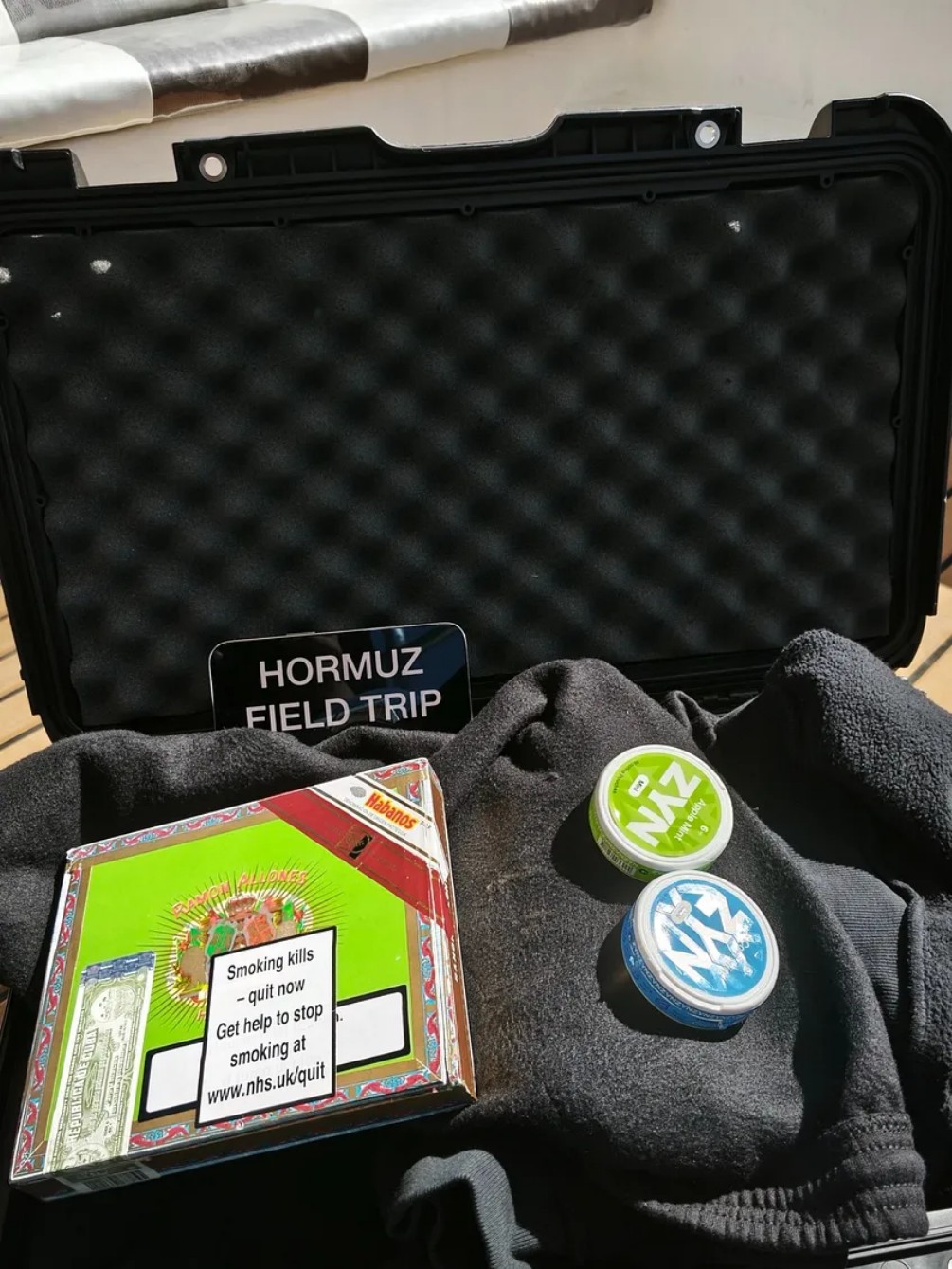
On the other side, #3 talked his way onto a rickety speedboat with no GPS, defied advice from Omani officials to turn back, and rode on the open seas eighteen miles from the Iranian coast while Shahed drones flew overhead and Revolutionary Guard patrol boats ran patterns in the distance. He swam in the Strait of Hormuz smoking one of the Cubans he still had on him.到了另一边,#3 说服别人让他登上一艘没有 GPS 的老旧快艇,无视阿曼官员让他折返的建议,在距伊朗海岸仅十八英里的开阔海面上疾驰,头顶 Shahed 无人机飞过,远处革命卫队巡逻艇往来穿梭。他叼着身上仅剩的一根古巴雪茄,在霍尔木兹海峡里游了泳。
And then, he was intercepted by the Coast Guard, detained, and had his phone confiscated — before, eventually, making it back home to share everything he’d learned with us in an 8-hour debrief session.然后,他被海岸警卫队拦截、拘留,手机被没收——最终,他还是回到了家,在一场长达八小时的汇报中,把所学到的一切分享给了我们。
This is what Analyst #3 found on his field trip to the Strait of Hormuz, from his point of view, with some key names, places and details of key events changed to protect the safety of anonymous sources. The quotes are based on his memory of the events, translated from the original Arabic. Which is the best we could do from an accuracy standpoint — considering #3’s phone, and all of the notes and photos on it, is thousands of miles away, likely being combed through by the Omani authorities as we speak.以下是 Analyst #3 在霍尔木兹海峡实地考察中的发现,以他的第一人称视角叙述,其中一些关键人名、地点和事件细节做了更改,以保护匿名消息源的安全。引语基于他对事件的记忆,由阿拉伯语原文翻译而来。这是我们在准确性方面能做到的最好——毕竟 #3 的手机,以及其中所有笔记和照片,此刻正在数千英里之外,很可能正被阿曼当局逐一翻查。
“What if I just went to the Strait of Hormuz?”"要不我直接去霍尔木兹海峡?"
It’s the kind of question that starts as a joke — the kind of thing you say at two in the morning to yourself in bed that doesn’t survive contact with daylight, that joins the vast graveyard of schemes you were absolutely going to execute before you fell asleep and woke up a person with responsibilities again. But it wasn’t 2AM, and we weren’t in bed.这是那种一开始像玩笑的问题——那种凌晨两点躺在床上对自己说的话,天一亮就不再当真,加入那个由无数"睡前绝对要执行、醒来又变回一个有正事的人"的计划所组成的庞大墓地。但那时不是凌晨两点,我们也不在床上。
We were sitting in CitriniResearch’s offices, in Midtown Manhattan, watching the biggest geopolitical crisis of the decade unfold on our phones. We watched the most liquid markets in the world fluctuate like meme-coins in a game of Trump Tweet-AP Headline pong.我们坐在 CitriniResearch 位于曼哈顿中城的办公室里,看着手机上这十年来最大的地缘政治危机展开。我们目睹全球流动性最强的市场像 meme 币一样剧烈波动,仿佛在特朗普推文和美联社头条之间打乒乓球。
It was clear that nobody — literally nobody, not the analysts, not the correspondents, not the retired generals doing hits on cable news and least of all us — actually had any idea what was going on. Everyone was working from the same stale satellite imagery and the same unnamed Pentagon sources and the same AIS shipping data, which, as I would later discover, was missing roughly half of what was actually transiting the strait on any given day.很明显,没有人——真的没有人,分析师没有,记者没有,在有线电视新闻里做评论的退役将军没有,我们自己更没有——真正知道发生了什么。所有人都在用同样过时的卫星图像、同样的匿名五角大楼消息源、同样的 AIS 船舶数据工作。而我后来发现,那些 AIS 数据遗漏了每天实际通过海峡的大约一半船只。
And, after all, wasn’t it our job to make confusing investment environments less confusing? I wanted to do that, I had the connections to make it happen (at least some of it) and it would make for a pretty great story. So it was decided.说到底,让混乱的投资环境变得不那么混乱,不正是我们的工作吗?我想做这件事,我有人脉可以促成(至少部分),而且这会是一个相当精彩的故事。于是就这么定了。
From Citrini’s apartment in New York, we packed a Pelican case with a Xiaomi phone (that had a Leica camera with a 150x zoom, a souvenir from our trip to visit Robotics factories in China), an EPIRB, $15,000 in cash, a gimbal and a microphone kit. We sat down and researched an itinerary, working backwards from the questions we most wanted answered.在 Citrini 位于纽约的公寓里,我们往一只 Pelican 箱里塞了一部小米手机(搭载徕卡相机,150 倍变焦,是我们去中国参观机器人工厂时带回的纪念品)、一台 EPIRB 紧急示位信标、一万五千美元现金、一个手持稳定器和一套麦克风。我们坐下来研究行程,从最想回答的问题倒推规划。
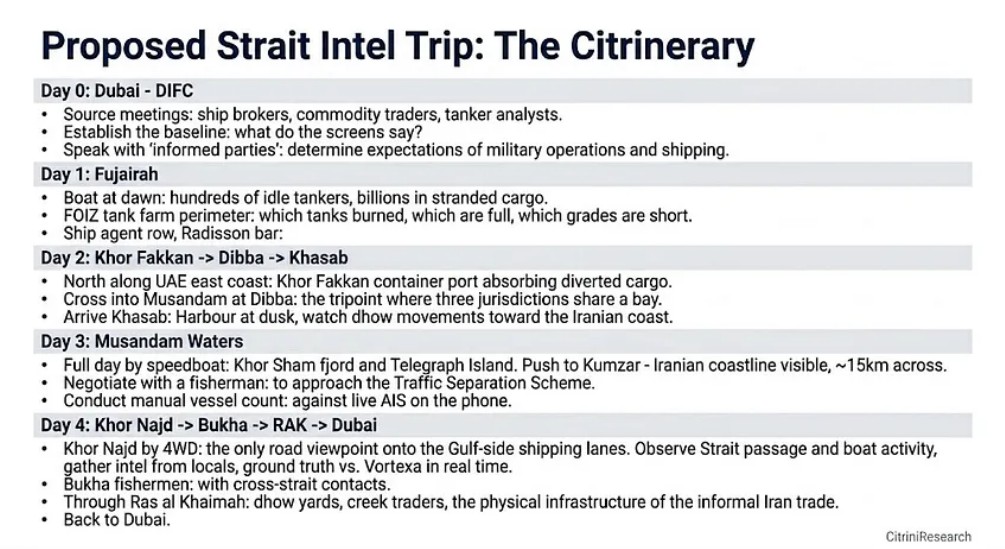
I’d land in Dubai, speak with some informed parties I knew and contacts of CitriniResearch’s, drive to Fujairah for some B-roll and information gathering at the oil terminal, then cross into northern Oman’s Musandam province, get to Khasab, and try to get on the water.我先飞迪拜,和一些知情人士以及 CitriniResearch 的联系人交谈,然后驱车前往富查伊拉,在石油码头拍一些辅助素材并收集信息,接着越境进入阿曼北部的穆桑达姆省,到达哈萨布,再设法上船出海。
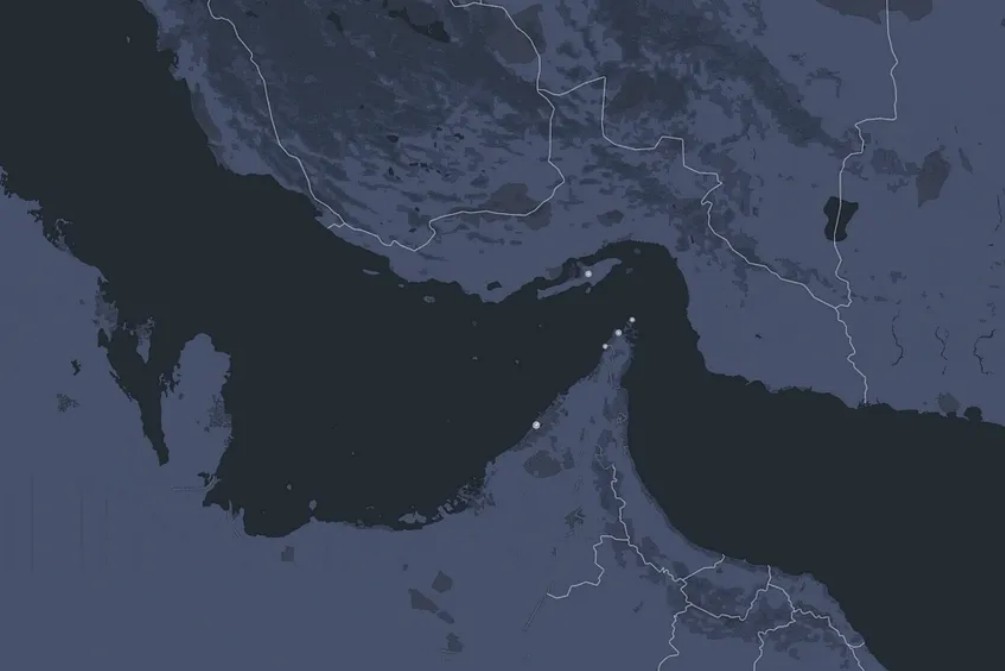
I started calling tourism companies trying to book a boat to Kumzar — an Omani village only accessible by sea, the closest inhabited point to the Iranian coast. It was an opsec mistake in retrospect — telegraphing my visit — but I couldn’t think of another way to secure a ride. And on the bright side, from an opsec perspective, the identities I was sharing were totally made up.我开始打电话给旅游公司,试图预订一艘前往库姆扎尔的船——那是一个只能从海上抵达的阿曼村庄,也是离伊朗海岸最近的有人居住点。事后来看这是一个行动安全上的失误——等于提前暴露了我的行踪——但我想不到别的办法弄到船。好在从行动安全角度看,我报出的身份全是编造的。
I tried something different every time I picked up the phone. Adventure tourist. Oil trader who wanted to count the boats going through. Real estate investor. (”Bro, what do you mean I’m the first real estate guy you’ve heard from? This is the perfect time to buy! Land is cheap right now! Buy when others are fearful!”) Didn’t matter what I said on my end. What they said on the other end was consistent: “No.”每次拿起电话,我都换一个说辞。探险游客。想数过往船只的石油交易员。房地产投资人。("兄弟,你说我是你遇到的第一个来问的房地产人?现在正是买入的好时机!地价便宜!别人恐惧时贪婪!")不管我怎么说,对方的回答都一样:"不行。"
Except for a single dolphin tour outfit. They said yes. Turns out: the IRGC can stop oil tankers. Dolphins are not intimidated. I had my ride to Hormuz.只有一家海豚观光公司答应了。事实证明:IRGC 能拦住油轮,但吓不住海豚。我找到了前往霍尔木兹的船。
We compared a list of all the contacts we had, and created a list of questions for each of them. Questions for shipping agents, maritime brokers, bunkering firms, government officials, military officers, local businesspeople intermediaries and everything in between. We’d gather as much information from people living and dealing with this in a real way as possible, then I’d go and observe the strait with my own two eyes from the tip of Oman.我们比对了手头所有联系人的名单,为每一位拟定了问题清单。针对船运代理、海事经纪人、燃料补给公司、政府官员、军官、当地商人中间人等等,应有尽有。我们要尽可能多地从那些真正身处其中、与之打交道的人那里收集信息,然后我亲自从阿曼最北端用自己的双眼观察海峡。
I landed in Dubai and went straight to Fujairah. Anyone can make this trip, but it was still worthwhile. I saw the damage on the storage tanks from a previous strike, which was much less than I expected – a worker there told me that Ruwais got it much worse.我飞抵迪拜后直奔富查伊拉。任何人都可以去,但仍然值得一行。我看到了此前袭击在储油罐上留下的损伤,比我预想的轻得多——一位工人告诉我,鲁韦斯那边受损严重得多。
I was speaking with some people who were just doing their job, three weeks after a drone strike could have killed them. I managed to speak to a few people there off the cuff, from GPS Chemical and Chem Oil. They confirmed that operations were at about 30% of pre-conflict levels, but the port was back to operational. I wasn’t going to finesse my way into accessing the terminal, so I drove back — just in time for the poker game I play whenever I’m in Dubai.我和一些人交谈,他们只是在做自己的工作,而三周前一场无人机袭击差点要了他们的命。我设法与 GPS Chemical 和 Chem Oil 的几个人进行了即兴交流。他们证实,运营量大约是冲突前的百分之三十,但港口已恢复运作。我不可能混进码头内部,于是驱车返回——正好赶上我每次到迪拜都会打的扑克局。
No sleep since New York.从纽约出发后一直没睡。
I was in the kind of headspace where it’s very hard to make money playing poker.那种精神状态下打牌,很难赢钱。
Every time I go to Dubai, I play in the same game.每次去迪拜,我都参加同一桌牌局。
The guys at the table are the people I’d call if something went wrong anywhere in the Gulf.桌上的那些人,就是如果海湾任何地方出了事我会第一个打电话的人。
The war, they all seemed to agree, was going to last way longer than people imagined. The next meaningful escalation, one predicted: strikes on Qeshm. Four days later, it came true. I was told to leave the region by the 6th — that was when they said, “shit is gonna pop off.” American soldiers had been amassing in the region at a much higher rate than reported, and the number of Iranian drone strikes seemed to have been much higher than anyone in the US was thinking. I asked what they were targeting, “Americans, brother. Americans and American infrastructure”. Seemed like a stupid question in hindsight.关于这场战争,他们几乎一致认为,持续时间会远超人们的想象。其中一人预测,下一次有意义的升级将是打击格什姆。四天后,果然应验。他们告诉我六号之前离开该地区——他们说,"到时候就要炸锅了。"美军在该地区的集结速度远超公开报道,伊朗无人机的打击次数似乎也远多于美国国内的认知。我问打击目标是什么。"美国人,兄弟。美国人和美国的基础设施。"事后看来,这个问题问得有点蠢。
At some point I dropped the news: “I’m going to Musandam. I’m going to be on the strait.”在某个时刻,我抛出了这个消息:"我要去穆桑达姆。我要上海峡。"
Everyone laughs it off.所有人一笑置之。
Then they realize, for maybe the first time ever at that table, I’m not joking around. “Bro, what are you talking about?” One guy wanted to come with me but said his dad would kill him.然后他们意识到,也许是那张牌桌上有史以来头一次,我不是在开玩笑。"兄弟,你在说什么?"其中一个人想跟我一起去,但说他爸会杀了他。
I asked if I could call these guys if something went wrong. They said they weren’t sure it would make a difference. And then one of them started chuckling, before launching into a story about a situation he did not view as too dissimilar to this one.我问如果出了事能不能给他们打电话。他们说不确定打了电话能有什么用。然后其中一个人开始窃笑,接着讲了一个他认为与此情形颇为相似的故事。
“There was an Emirati fisherman a couple years back who waded into Iranian waters unknowingly. The IRGC caught him. And then they brought him back to the Emirates,” he said, pausing. “In a barrel. In seventy-two pieces.”"几年前有个阿联酋渔民,不知不觉漂进了伊朗水域。IRGC 抓住了他。然后把他送回了阿联酋,"他停顿了一下,"装在一个桶里。切成了七十二块。"
What do you say after that?听完这话你能说什么?
Nothing, for a moment — until one of the other guys jumped in with a constructive idea. “I just bought Meta Ray-Ban glasses,” he said. “Want them?”沉默了片刻——直到另一个人跳出来提了个建设性的主意。"我刚买了 Meta Ray-Ban 眼镜,"他说,"你要不要?"
I said yes — and threw them in the Pelican case.我说要——然后把它扔进了 Pelican 箱。
Poker wraps up around six in the morning. I hop in the car for the Omani border. My brain is mashed potatoes. Adrenaline from the idea of being on the strait is the only fuel.牌局在早上六点左右散场。我跳上车,驶向阿曼边境。脑子已经成了一团浆糊。唯一的燃料是即将踏上海峡的肾上腺素。
Dubai is still, in many ways, Dubai — Cipriani is still popping (albeit less popping than pre-crisis), all bellinis and meringue — but as you drive toward the border with Oman the veneer peels off in stages. American soldiers where there used to be nothing, empty roads where there used to be traffic, and then a rickety desert crossing in the middle of nowhere that looks like it was built to process livestock and has been repurposed for humans.迪拜在很多方面仍然是迪拜——Cipriani 依旧热闹(虽然不如危机前那么火爆),贝利尼鸡尾酒和蛋白霜甜点一切照旧——但当你驶向阿曼边境时,那层光鲜的外衣一层层剥落。原本空无一物的地方出现了美国士兵,曾经车流不断的道路空无一人,最后到达一个荒漠中央的简陋关口,看上去是为处理牲畜而建、后来被改作人用的。
I made the mistake of snapping a picture — so sleep-deprived I was just holding my phone up, very obviously, as if I were a tourist at a scenic overlook rather than a restricted military border zone. The guard stared at me with the expression of a man trying to decide whether the person in front of him is a threat or simply an idiot. “Did you just… take a picture?”我犯了个错——拍了张照。睡眠严重不足的我就那样举着手机,毫不遮掩,仿佛自己是在观景台上的游客而非军事禁区。守卫用一种"正在判断眼前这个人是威胁还是纯粹白痴"的表情盯着我。"你刚才……拍照了?"
The UAE side had been fine — stamp, back in the car. The Omani side was not. I got directed into what I can only describe as the worst desert DMV on Earth: four Pakistanis drinking tea barefoot, running back and forth between windows with the efficiency of people who’ve been doing this for decades and would very much like to continue doing it without incident. I’m standing there in a snapback and American Apparel sweatpants. Everyone ahead of me sailed through — stamp, gone. I handed over my Western passport and the two guards looked at it, looked at each other with the kind of wordless communication that is never good for the person being looked at, and one of them said, wait one sec.阿联酋那边倒是顺利——盖章,上车走人。阿曼这边可不行。我被引导进入一个只能形容为"世界上最糟糕的沙漠车管所"的地方:四个巴基斯坦人光着脚喝着茶,在几个窗口之间跑来跑去,效率就像那种干了几十年、非常希望能继续安稳干下去的人。我穿着棒球帽和美国服饰的运动裤站在那里。排在我前面的人一路畅通——盖章、走人。我递上我的西方国家护照,两个守卫看了看护照,又对视一眼——那种无声的交流对被看的那个人来说绝不是好兆头——其中一个说,等一下。
Ten minutes later a man came downstairs who starkly contrasted everyone else at the crossing — traditional Omani hat, pristine dress, the kind of person who smells expensive and speaks perfect English and is clearly operating several levels above the guys stamping passports. “Nice to meet you.” He pulled me into a back room with tea and began asking questions with the unhurried patience of someone who already knows most of the answers and is mainly interested in watching you try to construct the ones he doesn’t.十分钟后,楼上下来一个人,与关口的其他所有人截然不同——传统阿曼帽子、一尘不染的长袍,那种闻起来很贵、英语完美无瑕、明显比盖章的人高出好几个级别的人物。"幸会。"他把我带进一间有茶的后室,以一种从容不迫的耐心开始提问——那种已经知道大部分答案、主要是想看你如何拼凑出他不知道的那些答案的耐心。
He asked for the names of my parents. Where they’re from. Where I work. Then, delivered with the same pleasant tone: “You understand the rules here against photography, journalism, and intelligence gathering.” He asked about allegiances, the war, Israel. I told him I love everyone and I’m a tourist. He asked about my religion.他问了我父母的名字、他们来自哪里、我在哪里工作。然后,以同样愉快的语气:"你理解此地禁止摄影、新闻报道和情报收集的规定。"他问了立场、战争、以色列。我说我爱所有人,我是来旅游的。他问了我的宗教信仰。
“Are you Shia or Sunni? What kind of Muslim are you?"你是什叶派还是逊尼派?你是哪种穆斯林?"
“A bad one. I had three drinks two hours ago.”"不虔诚的那种。两小时前我还喝了三杯酒。"
He made me sign the pledge — a formal prohibition against reporting, photography, and information gathering, with full legal consequences — and watched me actually read it, which seemed to make him more suspicious rather than less, because apparently the expected behavior when presented with a legal document at a desert checkpoint is to just sign it, and the fact that I was reading it suggested I was the kind of person who thought carefully about what he was agreeing to.他让我签了那份保证书——正式禁止报道、摄影和情报收集,违者承担全部法律后果——并看着我认真地读完了内容。这似乎让他更加警觉而非更加放心,因为显然在沙漠检查站被递上一份法律文件时,正常的反应是直接签字,而我认真阅读这一事实暗示我是那种会仔细考虑自己在同意什么的人。
Then he said he’d look through my bags and asked if there was anything constituting recording equipment. The gimbal I could explain away. The Ray-Bans are sunglasses. But the microphone kit — furry windscreen, professional recording setup — that would end the trip before it started.然后他说要检查我的行李,问有没有任何录音设备。手持稳定器我可以解释过去。Ray-Ban 就是太阳镜。但那套麦克风——毛茸茸的防风罩、专业录音配置——那会让这趟旅程还没开始就结束。
He opened the Pelican case. Cigars on top. I offered him one. He took it, nodded with what I interpreted as genuine appreciation, lifted one layer of sweatpants, and closed the case.他打开了 Pelican 箱。雪茄在最上面。我给他递了一根。他接过去,带着我解读为真诚赞赏的神情点了点头,掀开了一层运动裤,然后合上了箱子。
Forty minutes past the border, the Omani coast opened into something genuinely beautiful — crystal water, mountains falling into the sea.越过边境四十分钟后,阿曼海岸线展开了一幅真正壮丽的画面——碧蓝澄澈的海水,群山直插入海。
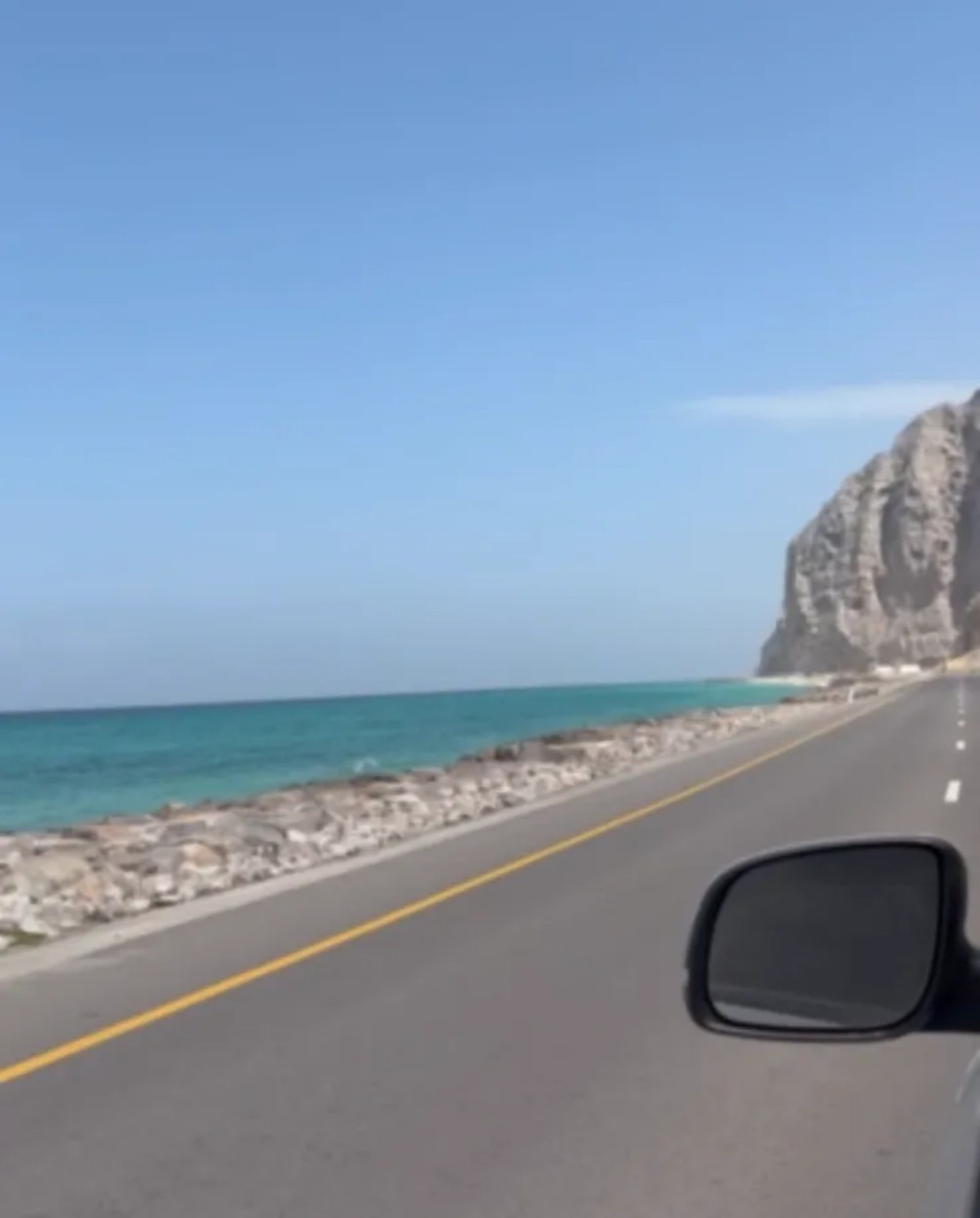
The first meeting I had in Oman reinforced the counterintuitive but persistent theme I repeatedly encountered: you can have hot war and commercial diplomacy happening at the same time. Before this trip, I was thinking about the situation in binary terms: either the strait is open or it’s closed. Either the conflict is escalating or it’s winding down. That’s not how it works.我在阿曼的第一场会面印证了一个反直觉却反复出现的主题:热战与商业外交可以同时进行。出发前,我对局势的理解是二元的——海峡要么开放要么封锁,冲突要么升级要么缓和。事实远非如此。
I managed to secure a meeting with an Omani official. A stoic, almost Yoda-like figure who had spent his entire life on the mouth of the Strait. He referred back to the Iran- Iraq war, the Iraq-Kuwait war and the 1970s crisis.我设法约到了一位阿曼官员。他沉稳内敛,像尤达大师一般,一生都在海峡入口度过。他一路回溯到两伊战争、伊拉克入侵科威特,以及七十年代的危机。
“What you’ll see happening,” he told me, “is a huge uptick in traffic alongside continued ground conflict in Iran.”"你将看到的,"他告诉我,"是船舶流量大幅攀升,同时伊朗境内的地面冲突仍在持续。"
“That sounds contradictory.” I replied. He acknowledged this."这听起来自相矛盾。"我回应道。他表示认同。
“Yeah, we just adapt to what’s going on. And like, this might seem counterintuitive to you, but this is the way of the region.” The framing he gave me was simple enough: The ground operations may or may not continue. Everyone else is trying to get on with their lives. It was described to me like two of your friends are having a fight, and the rest of you are still living your lives and going to bars. That’s the story on the ground."是的,我们只是在适应正在发生的一切。这对你来说或许反常,但这就是这片地区的行事方式。"他给我的框架很简洁:地面行动可能继续也可能停止,其他所有人则在努力过自己的日子。有人给我打了个比方:就像你的两个朋友在打架,其余人照常生活、照常去酒吧。这就是地面上真实的故事。
Afterwards, I arrived at my hotel. Normally a tourist destination, now looking like The Overlook from The Shining. I was one of two guests in a hundred rooms, the whole place being run at a loss to maintain the illusion that tourism was still happening.之后我到了酒店。这里平日是旅游胜地,如今却像《闪灵》里的瞭望酒店。一百间客房里只住了两位客人,整个酒店在亏损运营,只为维持旅游业仍在运转的假象。
The dolphin tour guy cancelled on me as soon as I tried to get back in touch, which, to be fair to him, was the rational response to the current security environment, and which was also, to be fair to me, extremely inconvenient. I walked the town for hours — talking to everyone, hotel staff and fishermen’s families and anyone who might know someone with a boat — getting rejected by every operator, twelve grand in cash in my pocket and no ride to the strait.海豚观光的船长在我再次联系时立刻取消了行程——说句公道话,在当前安全环境下这是理性反应;但对我来说,也确实极其不便。我在小镇上走了几个小时,跟所有人搭话——酒店员工、渔民家属、任何可能认识船主的人——被每一个运营商拒绝。口袋里揣着一万两千美元现金,却找不到一艘通往海峡的船。
I was the only Western person in the province, walking around in American clothes with cash in my pocket and wired headphones in, on the phone with Citrini while cars slowed down to look at me and kids pointed. The general atmosphere was that of a small town dealing with a moderately confusing alien visitation. It was the opposite of laying low and blending in.我是整个省唯一的西方人,穿着美式衣服,兜里装着现金,戴着有线耳机,一边走一边跟CitriniResearch通电话。过往车辆放慢速度打量我,小孩子指指点点。整体气氛就像一个小镇迎来了一次令人困惑的外星人来访。这与低调行事、融入当地完全相反。
I ended up at a tiny canal off the heavily fortified main port, with speedboats along each side, where I met a group of Iranian smugglers who told me their entire career was running contraband to Iran: electronics, cigarettes, alcohol, every day. I asked if they get arrested. Sometimes. One of their friends had died the week before.最终我来到主港口旁一条被严密设防的小水道边,两侧停满快艇。在那里我遇到一群伊朗走私者,他们告诉我,他们的全部职业就是每天向伊朗运送违禁品:电子产品、香烟、酒类。我问他们是否会被抓。有时候会。他们的一个朋友上周刚死了。
These guys were pro-IRGC and they were blunt about what they wanted: the strait open, under Iranian management. They wanted the business. They wanted the money. When I asked if the conflict had slowed their runs, they laughed.这些人支持IRGC,而且对自己的诉求毫不含糊:海峡开放,由伊朗管理。他们要的是生意,要的是钱。当我问冲突是否影响了他们的走私时,他们笑了。
They were in the Strait every day, there had been no decrease in illicit traffic — which, if you think about it, is its own kind of market signal. Just like the tankers leaving Kharg, if you’re a ship aligned with the IRGC, you don’t think twice about heading out to sea. It’s a sign that Iran has the ability to be selective regarding which ships to hit.他们每天都在海峡上活动,非法交通量丝毫没有减少——仔细想想,这本身就是一种市场信号。就像从哈尔克岛出发的油轮一样,如果你的船与IRGC有关联,出海根本不需要犹豫。这说明伊朗有能力选择性地决定打击哪些船只。
Among this group of guys, there was only one Omani in the group. I went up to him and spoke Arabic. His name was Hamid, and after I pulled out a wad of cash, he said he’d have a speedboat ready by morning.这群人中只有一个阿曼人。我走上前用阿拉伯语跟他交谈。他叫Hamid,在我掏出一沓现金后,他说明早给我准备一艘快艇。
That night I passed out around nine and was woken by the worst sound I’ve ever heard a telephone make — a low, droning, flatlining beep. The front desk informed me that two gentlemen from the CID were downstairs to ask me questions. CID, in the Gulf, is the CIA, with even less chill.那晚我九点左右就睡着了,却被一阵我听过的最恐怖的电话声惊醒——低沉、单调、像心电图拉成直线的嗡鸣。前台通知我,楼下有两位CID的先生要找我问话。在海湾地区,CID就是CIA,只不过更加不留情面。
I chucked my iPhone in the room safe and grabbed the burner. They’d seen the Citrini tweets about Analyst #3 — thanks, James.我把iPhone锁进房间保险箱,拿起备用手机。他们看到了CitriniResearch在推特上关于Analyst #3的帖子——谢了啊,James。
I went downstairs in my pajamas and hotel slippers. There’s a piece of opsec you learn as an Arab English speaker: if things get sticky, you only speak English, because Arabic opens doors you don’t want opened — the possibility that you’re a spy, a sympathizer, any number of things that are very hard to shake once someone decides you might be them. So I came downstairs speaking English only. “Hello guys. How are you? I speak English.” The hotel receptionist — the same man I’d been chatting with in Arabic all day — turned to the agents and said: “This guy speaks perfect Arabic.”我穿着睡衣和酒店拖鞋下了楼。作为一个会说阿拉伯语的阿拉伯裔英语使用者,有一条谍报生存法则:遇到麻烦时只说英语,因为说阿拉伯语会打开你不想打开的门——你可能是间谍、同情者,或其他一旦被怀疑就极难摆脱的身份。于是我下楼全程说英语。"Hello guys. How are you? I speak English." 酒店前台——就是那个我白天一直用阿拉伯语聊天的人——转向探员说道:"这人阿拉伯语说得非常溜。"
They told me to come with them. I asked if I could change out of my pajamas. They said get in the car. It was pitch black outside — and, also, inside the Honda Accord with two agents in the front and a very large man in the back who was about to become my seatmate. For twenty minutes we drove through Khasab, a town with no streetlights carved into mountains, the kind of darkness where you can’t see the road, and not one of these men said a single word. The only sounds were phone calls from a superior: “Do you have him?” and “How far away are you?”他们让我跟他们走。我问能不能换掉睡衣。他们说上车吧。外面漆黑一片——车内也是。一辆本田雅阁,前排坐着两个探员,后排坐着一个块头极大的人,即将成为我的邻座。我们在哈萨布开了二十分钟,这个嵌在群山中的小镇没有路灯,那种黑暗让你看不见前路。车上四个人没有一个说话。唯一的声音是上级打来的电话:"人带到了吗?""还有多远?"
I broke the silence and asked if there was a problem. The guy in front turned to the agent who’d picked me up and said, “Answer him.” The agent said, “No problem,” and the car went quiet again. At the station: “We have him in custody.”我打破沉默,问是不是出了什么事。前排的人转向接我的那位探员说,"回答他。"探员说,"没事。"车里再次安静下来。到了局里:"人已经带到。"
They went through everything, leaving the room and coming back, letting me stew. “We just find it hard to believe you’re here for tourism.” They hinted I was working for another government, bluffed me about an Iraqi passport I don’t have, took a written statement, and asked who I was with in Dubai. When I gave them a certain last name of someone I knew, the energy in the room shifted in a way that suggested this name meant something to them. I told them to call him and confirm that I was chill. They left me alone for hours in the kind of waterless room where you have a lot of time to think about the series of decisions that brought you here.他们把每件事都翻了个底朝天,不时离开房间又回来,让我在里面干熬。"我们实在很难相信你来这里是旅游的。"他们暗示我在为另一个政府工作,用一本我根本没有的伊拉克护照诈我,让我写了份书面声明,还问我在迪拜跟谁在一起。当我报出某个认识的人的姓氏时,房间里的气氛发生了某种微妙的转变,说明这个名字对他们有分量。我让他们打电话确认我没问题。之后他们把我一个人扔在一间没有水的房间里等了好几个小时——在那种地方,你有大把时间反思究竟是哪一系列决定把你送到了这里。
On the way out, having apparently decided I was more idiot than spy, they delivered the real blow: “We know about your boat trip. Cancel it. You’re not going.” They dropped me off back at my hotel with a parting comment, “We hope to have you back as a tourist in less…sensitive times.” A sincere, but eerie comment.出来的时候,他们显然判定我更像傻瓜而非间谍,然后给了我真正的打击:"我们知道你的出海计划。取消吧。你不准去。"他们把我送回酒店,临别留下一句:"希望下次能在不那么……敏感的时候接待你来旅游。"措辞真诚,却令人不寒而栗。
I messaged Citrini on Signal. The trip was dead. I got back the kind of message you send when you’re trying to be supportive from a comfortable distance: “Dude, it’s okay. It’s not meant to happen. It’s probably safer for you not to get on the strait, ship numbers and conversations are fine.”我在Signal上给CitriniResearch发了消息。行程泡汤了。回复是那种远在安全地带尝试表达支持的口吻:"兄弟,没事的。这事不该成。你不上海峡可能反而更安全,船舶数据和对话内容就够了。"
I stared at that text for a long time. The intelligence service had told me explicitly to cancel. Hamid’s number was compromised. The rational move — the move I would advise any other human being on earth to make — was to go to bed and drive back to Dubai in the morning as a person who had tried and failed and could live with that.我盯着那条消息看了很久。情报部门已经明确告诉我取消计划。Hamid的号码暴露了。理性的选择——我会建议地球上任何其他人做出的选择——是回去睡觉,明早开车回迪拜,做一个尝试过但失败了、好歹还活着的人。
I messaged Hamid and told him what happened. The CID pulled up, took his number, took my shit. Then I wrote: “What if we just went anyways?”我给Hamid发了消息,告诉他发生了什么。CID来过了,拿走了他的号码,翻了我的东西。然后我写道:"如果我们就这么去了呢?"
Hamid wrote back, in Arabic: “Fuck the police.”Hamid用阿拉伯语回了一句:"去他妈的警察。"
In the morning, Hamid’s “speedboat” turned out to be a forty-year-old dinghy with a few-hundred-CC engine and no GPS — everything by feel, navigation by a lifetime of knowing these waters and a shitty radio half-lashed to the hull. As we headed out, two Iranian smugglers we’d seen loading up at port ripped past us toward Iran, and minutes later two Coast Guard ships appeared out of nowhere and detained them. While every officer in the area was occupied processing two boats full of contraband, we slid along the coast and through unnoticed. Hamid looked at me: “We’re good.”早上,Hamid所谓的"快艇"原来是一条四十年船龄的橡皮艇,配着几百CC的引擎,没有GPS——全凭感觉导航,靠的是一辈子在这片水域的经验和一台半绑在船舷上的破对讲机。出港时,两个我们之前在码头看到装货的伊朗走私者全速朝伊朗方向飞驰而去,几分钟后两艘海岸警卫队的船凭空出现,截停了他们。当附近所有警力都在处理两船违禁品时,我们贴着海岸悄然溜过,没有人注意到。Hamid看了我一眼:"没事了。"
In Kumzar — a village so remote it speaks its own hybrid of Portuguese, Farsi, and Arabic, where half the families have relatives in Bandar Abbas and people transit to Iran as casually as they transit within Oman — I ate bread on the ground with fishermen who told me things that no tracking system and no satellite can show you.在库姆扎尔——一个偏远到拥有自己语言的村庄,那种语言混杂了葡萄牙语、波斯语和阿拉伯语;这里半数家庭在阿巴斯港有亲戚,人们往返伊朗就像在阿曼境内出行一样随意——我盘腿坐在地上和渔民们一起吃饼,他们告诉我的事情是任何追踪系统和卫星都无法显示的。
Tankers passing through four or five a day, completely dark on AIS. The volume, they said, is higher than what the data suggests, and it’s been accelerating in the past couple days through the Qeshm channel.每天有四五艘油轮通过,AIS完全关闭。他们说实际船舶量远高于数据显示的,而且过去几天通过格什姆水道的流量一直在加速增长。
They told me about drone strikes on civilian vessels and fishing boats — things blowing up that aren’t military targets and that never appear in any reporting anywhere. A man who’d been back and forth across the water twenty times since the conflict started put it like this: you see a vessel, you hear something, and it blows up. Just another day.他们告诉我无人机袭击了民用船只和渔船——被炸毁的并非军事目标,而且从未出现在任何报道中。一个自冲突开始以来已往返海峡二十次的人这样描述:你看到一艘船,听到一声响,然后它就炸了。不过是又一个寻常日子。
Old fishermen sitting on the beach told me both things at the same time — way more boats passing through than you think, and way more strikes happening than you think. I asked how these seemingly contradictory narratives could both be right. They didn’t have a framework for it. They just shrugged. The neat binary — open or closed, escalating or de-escalating — simply doesn’t match the observable reality from the shoreline of Kumzar. It’s both more ships and more strikes. This was beginning to be a theme – US threats of total war while US allies negotiated with the target, drone strikes increasing at the same time that vessel traffic crossing the strait rose. Nothing seemed set in stone.坐在海滩上的老渔民同时告诉我两件事——通过的船比你以为的多得多,发生的袭击也比你以为的多得多。我问这两个看似矛盾的叙事怎么可能同时成立。他们没有什么理论框架,只是耸耸肩。那种整洁的二元叙事——开放或封锁、升级或缓和——与库姆扎尔海岸线上可观测到的现实根本不符。既有更多的船,也有更多的袭击。这开始形成一个反复出现的主题——美国威胁要发动全面战争,而美国的盟友同时在与被威胁对象谈判;无人机袭击在增加,横渡海峡的船舶流量也在上升。一切似乎都不是板上钉钉的。
What I was told — by the Kumzaris, by an Omani official I met the following day, corroborated by Iranians on the water — is that this is about Iran asserting that you need approval to transit, but the approval is kind of a propaganda tool. A way of portraying the US as the unreliable ally and Iran as the rational actor making the best of a bad situation.库姆扎尔人告诉我的,一位我次日见到的阿曼官员告诉我的,以及水面上伊朗人证实的,都指向同一件事:伊朗在宣示——通过海峡需要获得批准,但这种审批更多是一种宣传工具。一种将美国塑造为不可靠盟友、将伊朗塑造为在困局中保持理性的行为体的手段。
It is Iran saying: We can operate the Strait peacefully, we can enforce safety under our management, and the proof of our sovereignty is that commerce will continue to flow regardless of what the United States does. Follow our process, pass our diligence, and you’re fine.伊朗在说的是:我们能够和平运营海峡,我们能够在自己的管理下保障安全,而我们主权的证明就是——无论美国做什么,商业航运都将继续流通。遵循我们的流程,通过我们的审查,你就没事。
It also reminded me of something I had heard in Ras Al Khaimah. There, in a hotel bar, I met with an Aussie Greek vessel captain — a grizzled, bald guy who looked like Mike Ehrmantraut from Breaking Bad.这也让我想起了在哈伊马角听到的一些事。在那里的一家酒店酒吧,我见到了一位澳大利亚裔希腊籍船长——一个久经风霜的光头硬汉,长得像《绝命毒师》里的Mike Ehrmantraut。
We left the bar, walked out to the port and smoked cigarettes as he laid out the mechanics of the Iranian Toll Booth. His ship was in queue to receive Iranian approval to transit. They were in the process of submitting information. He described a queue of vessels lined up in this back-and-forth with Iranian intermediaries, waiting their turn. You don’t go through if you don’t get approved. This is the difference between a blockade and a toll road, and the market has been pricing the former while the reality on the water is setting up to look a lot more like the latter.我们离开酒吧,走到港口外边抽烟,他向我详细解释了伊朗收费站的运作机制。他的船正在排队等待伊朗的过境批准,正在提交相关资料。他描述了一长队船舶在与伊朗中间人反复沟通中排队等候。没获批就不能通过。这就是封锁与收费公路的区别——市场一直在按前者定价,而水面上的现实越来越像后者。
He disabused me of more than a few ideas that, in hindsight, can only be described as situation-monitor-slop. He told me nobody really thought the strait was mined. His reaction to the idea of insurance being the only reason vessels weren’t crossing was one of near incredulity, “The bottleneck is not wanting to die. Insurance? Do you think we want to die?” he asked. “Look, some guys will run it. Dynacom, Sinokor, they’ve got balls. But think about it from the owner’s side. You send your ship through, it gets hit, now what? You’re out a vessel in the hottest rate environment any of us have ever seen. Insurance pays you out, great, but you can’t buy a replacement tomorrow. The fleet’s spoken for. Meanwhile the guy who kept his ship parked as floating storage in the Gulf is printing money doing nothing. So yeah, it’s not just about dying. It’s about being stupid.”他纠正了我不少想法,事后看来只能称之为"态势监控垃圾信息"。他告诉我没有人真的认为海峡被布了雷。当我提到保险是船只不愿过境的唯一原因时,他几乎难以置信。"瓶颈是不想死。保险?你以为我们想死吗?"他说。"听着,有些人会硬闯。Dynacom、Sinokor,他们有胆子。但从船东的角度想想。你派船过去,被击中了,然后呢?在所有人经历过的最火爆的运价环境中你损失了一艘船。保险赔你了,很好,但你明天买不到替代船。运力已经被锁死了。与此同时,把船停在波斯湾当浮式仓储的人什么都不干就在印钞。所以说,这不仅仅是怕死的问题,更是怕犯蠢。"
As I stood looking out on the waters of the port listening to him explain this all, I realized how many of the narratives that had been tossed across the desk or on IB chat were beginning to seem…well…pretty fucking stupid. These were real people out here, with real human motivations and real human emotions. That same framework applied to most of the decision-makers involved.站在港口望着水面,听他娓娓道来,我意识到那些在办公桌前或彭博聊天里流传的叙事,有多少开始显得……相当他妈的愚蠢。这里是真实的人,有着真实的动机和真实的情感。同样的框架适用于大多数相关决策者。
The Omanis — the most neutral observers in the Gulf, neighbors with Iran the longest — generally agreed with this characterization. Their view was that the Iranians were rational and predictable. The Kumzaris, whose families live in Bandar Abbas and whose army is the IRGC, had more extreme views. They told me this war would be their chance to humble the empire.阿曼人——海湾地区最中立的观察者,与伊朗为邻最久——总体认同这种判断。在他们看来,伊朗人是理性且可预测的。库姆扎尔人的观点更加激进,他们的家人住在阿巴斯港,他们的军队是IRGC。他们告诉我这场战争将是让帝国低头的机会。
We left Kumzar and headed for open water.我们离开库姆扎尔,驶向开阔水域。
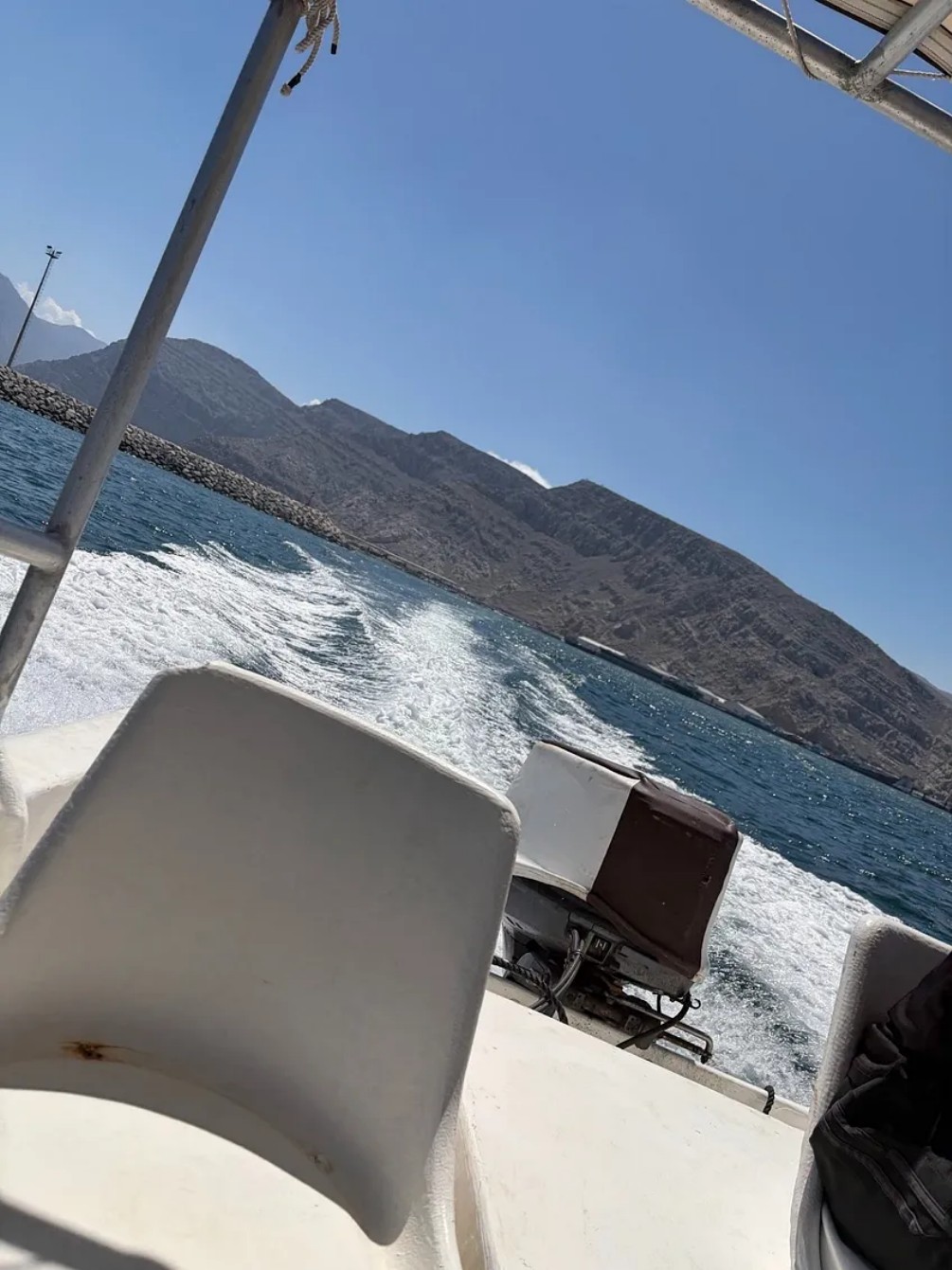
When the Iranian coast came into full view, I lit a cigar. Twelve miles out, Qeshm Island was visible in the distance — the first island in Iran, which would be hit by airstrikes the following day, a fact I did not know at the time other than from my friends at the poker game who warned it could happen. The day after that, it would be the site of a U.S. F15, and later an A-10, being shot down.当伊朗海岸完全映入眼帘时,我点了一根雪茄。十二海里外,格什姆岛隐约可见——伊朗的第一座岛屿。第二天那里就会遭到空袭,但当时我并不知道这一点,除了牌桌上的朋友们警告过这可能发生。再过一天,一架美军F-15,随后一架A-10,将在那里被击落。
Then I looked up, and the war became real in a way that no amount of satellite imagery or AIS data can prepare you for.然后我抬起头,战争以一种任何卫星图像或AIS数据都无法让你准备好的方式变得真实了。
You can see the Shahed drones with your naked eyes: propellers spinning, cruising through the sky at low enough altitude that the silhouette is unmistakable. I raised my phone to take a picture and Hamid — the fuck-the-police guy — screamed at me not to. American drones were operating separately, higher up. AIS-off tankers were appearing on my phone’s signal from the Omani SIM, ships that don’t exist on any tracking platform, ghosts on the water that the Kumzaris had told me about and that I was now watching with my own eyes.你用肉眼就能看到Shahed无人机:螺旋桨旋转着,在低空巡航,低到剪影轮廓清晰可辨。我举起手机想拍照,Hamid——那个说"去他妈的警察"的人——冲我吼叫不许拍。美军无人机在更高的空域单独行动。AIS关闭的油轮出现在我手机的阿曼SIM卡信号上,这些船在任何追踪平台上都不存在,是水面上的幽灵——库姆扎尔人告诉过我的,而我此刻正亲眼目睹。
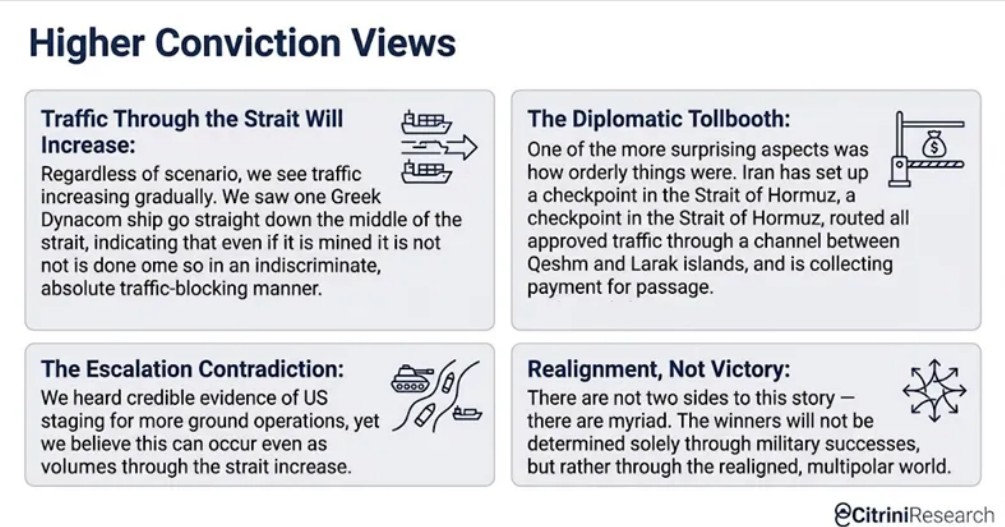
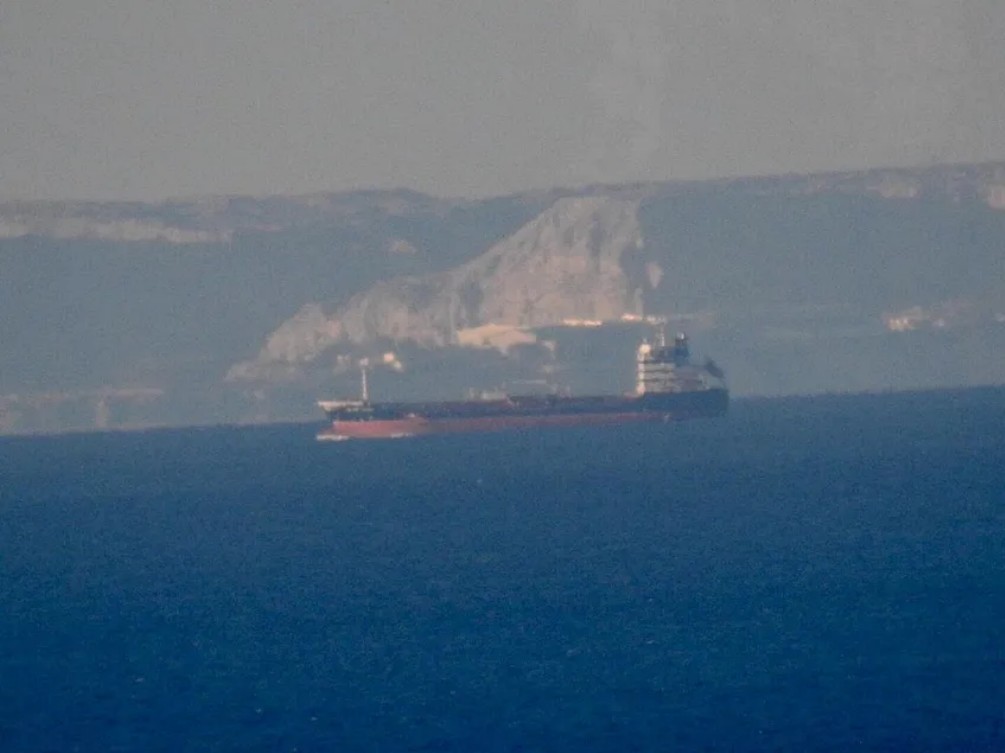
And then I saw a Greek Dynacom ship ripping straight through the center of the strait — not hugging the margins like every other captain, not creeping along the coast, but charging through the middle as if this were peacetime. It was the only vessel doing that. Everyone else was hedging, minimizing their profile, trying to be small. This ship was not shy. It had clearly cut a deal, exactly the kind of bespoke arrangement the Kumzaris and the Omanis had described. If you want a single image that confirms the thesis that the strait is reopening under Iranian management, it’s a Greek tanker running full speed through the center of Hormuz while drones fly overhead and everyone else hides along the edges.然后我看到一艘希腊Dynacom公司的船径直从海峡正中央全速驶过——不像其他船长那样贴着边缘,不是沿海岸小心翼翼地爬行,而是像和平时期一样冲过正中。只有这艘船这么做。其他所有船都在对冲风险、尽量缩小存在感、努力让自己不起眼。这艘船毫不畏缩。它显然已经谈好了条件,正是库姆扎尔人和阿曼人描述的那种定制安排。如果你想要一个画面来印证"海峡正在伊朗管理下重新开放"这一论点,那就是:一艘希腊油轮在霍尔木兹海峡正中全速航行,头顶无人机盘旋,其他所有船都缩在边缘。
We also observed what appeared to be Chinese vessels transiting the Qeshm-Larak Channel, and confirmed ships flagged from India, Malaysia, Japan (LNG tanker), Greece, France (container ship), Oman, and Turkey.我们还观察到疑似中国船只正在通过格什姆-拉拉克水道,并确认了来自印度、马来西亚、日本(LNG油轮)、希腊、法国(集装箱船)、阿曼和土耳其的船只。
Communities along the strait had reported two to four ships a day through the channel roughly in the two weeks before our arrival. We confirmed 15 ships crossing the Strait on April 2nd. The counting methodology was not exactly institutional-grade (a barstool with a sightline and a Chinese phone zoomed to maximum from the hotel, supplemented by a notebook on the water). But the data it produced was significant.沿海峡的社区报告说,在我们到达前大约两周内,每天有两到四艘船通过水道。我们在4月2日确认了15艘船穿越海峡。计数方法算不上机构级别(一把高脚凳加一条视线,一部中国手机拉到最大变焦从酒店拍摄,辅以水面上的笔记本)。但它产出的数据意义重大。
Contacts told us that pace continued on the 4th, with another 15-18 ships crossing. That’s the prior week’s worth of traffic in two days.线人告诉我们4日节奏延续,又有15到18艘船通过。这是前一周的总流量在两天内完成。
This all confirmed what the Aussie captain had told me — that the drones only hit tankers that refused to comply with Iran’s rules of the road.这一切印证了那位澳大利亚船长告诉我的——无人机只攻击拒绝遵守伊朗航行规则的油轮。
But out on the water, I remained vigilant. Hamid and the Kumzaris had told me about fishing boats getting obliterated for no discernible reason, random civilian vessels destroyed without warning or explanation, and likely accidents. These drones did not appear to be making fine distinctions between a noncompliant tanker and a forty- year-old dinghy.但在水面上,我依然保持警觉。Hamid和库姆扎尔人告诉过我,渔船会毫无缘由地被炸毁,随机的民用船只在没有警告或解释的情况下被摧毁,很可能是误伤。这些无人机看起来并不会精确区分一艘违规油轮和一条四十年船龄的橡皮艇。
So I figured, if I was out here, I might as well go for it. I hopped in the water and swam. Cigar in my mouth. Shaheds above. Hamid took a picture with my Chinese burner phone.所以我想,既然都到这儿了,不如豁出去。我跳进水里游了起来。嘴里叼着雪茄。头顶是Shahed无人机。Hamid用我的中国备用手机拍了张照。
I hopped back onboard. Then the smuggling boats started running past — eight of them, maybe more, Iranian kids in their early twenties with big smiles, waving, throwing cigarettes across to us. I threw up a peace sign. And then one of them turned and pulled directly toward us at high speed from the direction of Iran. For five seconds I was certain it was over. The Emirati in the barrel — 72 pieces — was the only thing in my head.我爬回船上。然后走私船开始从旁边飞驰而过——八艘,也许更多,船上是二十出头的伊朗年轻人,笑容灿烂,挥手致意,朝我们扔香烟。我竖起和平手势。然后其中一艘突然从伊朗方向直接高速朝我们冲来。那五秒钟我确信一切完了。脑子里唯一的画面是"迪拜人装进桶里——碎成七十二块"。
Turned out, it wasn’t the IRGC. Just another smuggler. He slowed alongside our boat, close enough that I could see his face. He was smoking a cigarette. I was smoking a cigar. He held out his cigarette and I handed him my cigar, and we looked at each other across the gap between two boats in the middle of the most contested waterway on earth, and we nodded, and we smiled, and neither of us said a word.结果不是IRGC,只是又一个走私者。他在我们船旁减速,近到我能看清他的脸。他在抽烟,我在抽雪茄。他伸出手里的香烟,我递过去我的雪茄。我们隔着两条船之间的间隙,在这条地球上争议最激烈的水道正中对望,彼此点头,彼此微笑,谁都没有说一句话。
That’s something I’ll tell my grandkids about.这是一件我将来会讲给孙辈听的事。
We decided it was time to leave.我们决定是时候离开了。
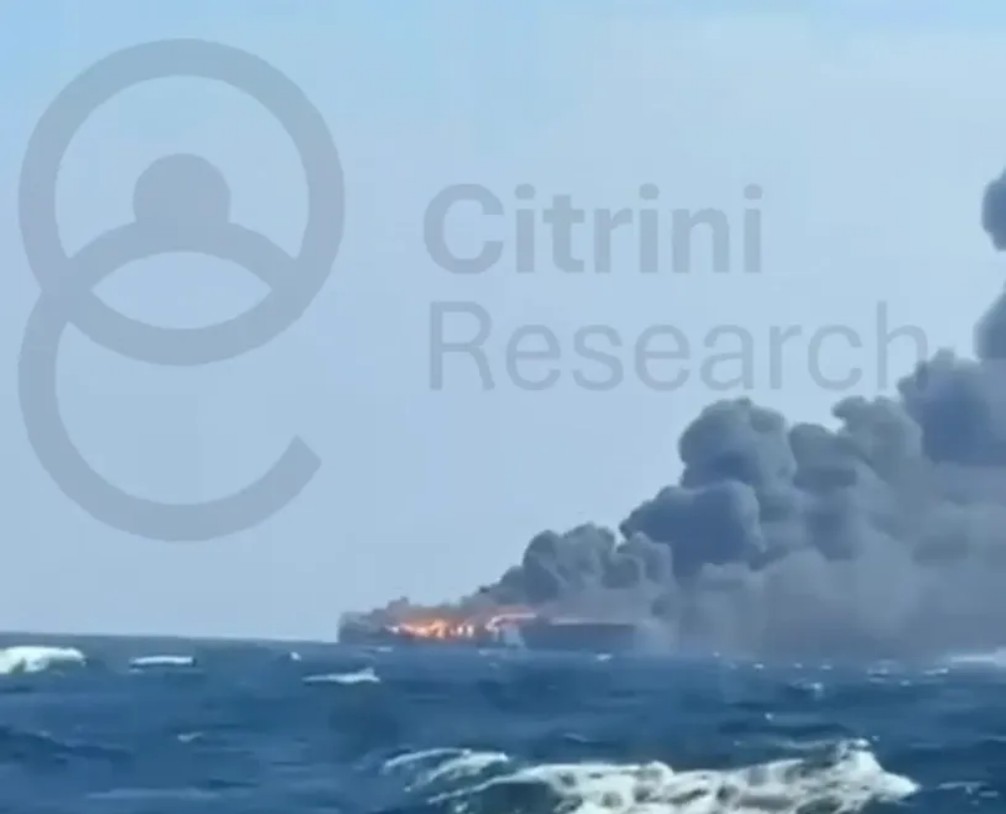
On the way back, riding the highest high of my life, reception flickering back on my phone, the Coast Guard intercepted us with rifles drawn. I went straight to English — “Tourist” — while they screamed at Hamid, and I was scrambling to send files to my other phone and delete pictures, because if they found a single photograph of a drone, I was gonna be in a bad spot — the kind the guys at my poker table couldn’t help me with.返程途中,肾上腺素飙到人生巅峰,手机信号若隐若现,海岸警卫队持枪拦截了我们。我立刻切换到英语——"Tourist"——他们则对着Hamid大声呵斥。我手忙脚乱地把文件传到另一部手机上并删除照片,因为一旦他们发现哪怕一张无人机的照片,我就会陷入真正的麻烦——那种我牌桌上的朋友们也帮不了我的麻烦。
The officers escorted us to the place where they process smugglers — the port jail, not the police station, not the border, the facility for people whose lives the system doesn’t particularly value. They took the Chinese phone, said they’d go through everything on it, and threw me in one room and Hamid in another. Hamid’s boat had no GPS, just a handheld radio MacGyvered to the hull, and when the Coast Guard asked if we had navigation equipment and we said no, the officer delivered his assessment with the weary directness of a man who has seen a lot of stupid decisions and has ranked this one near the top.军官把我们带到了处理走私犯的地方——港口拘留所,不是警察局,不是边检站,而是专门关押那些在体制眼中无足轻重之人的设施。他们没收了那部中国手机,说会彻查里面所有内容,然后把我关进一间屋子,Hamid关进另一间。Hamid的船上没有GPS,只有一台用土办法固定在船身上的手持电台。当海岸警卫队问我们有没有导航设备、我们回答没有时,那名军官以一种见多了蠢事的人特有的疲倦而直白的语气给出了他的评价——他已经把这次行为列入了他人生所见蠢事排行榜的前几名。
After a while — and after a high up friend apparently made some calls whose content I will probably never know — they let me go. They told me I was a moron, they were keeping the phone, and if they found anything incriminating I’d be prosecuted.过了一阵——据说是某位高层朋友打了几个电话,内容我大概永远不会知道——他们放我走了。他们说我是个白痴,手机他们留下了,如果查到任何违法内容就会起诉我。
I never heard back from them. That was the nadir of the whole trip — the moment where I was closest to real, life-altering consequences. But I didn’t care. I would have gone to jail. I was so high on the fact that I’d actually been on the strait — that I’d done the thing, seen it with my own eyes, gathered information that nobody else had — that I felt nothing resembling fear. I went back to the empty hotel bar and drank eleven beers.后来再没有人联系过我。那是整趟旅程的最低谷——我离真正改变人生的后果最近的时刻。但我根本不在乎。就算坐牢我也无所谓。我因为自己真的到了海峡——真的做到了,亲眼看到了,收集到了别人没有的信息——而处于一种极度亢奋的状态,完全感受不到任何恐惧。我回到空荡荡的酒店酒吧,喝了十一瓶啤酒。
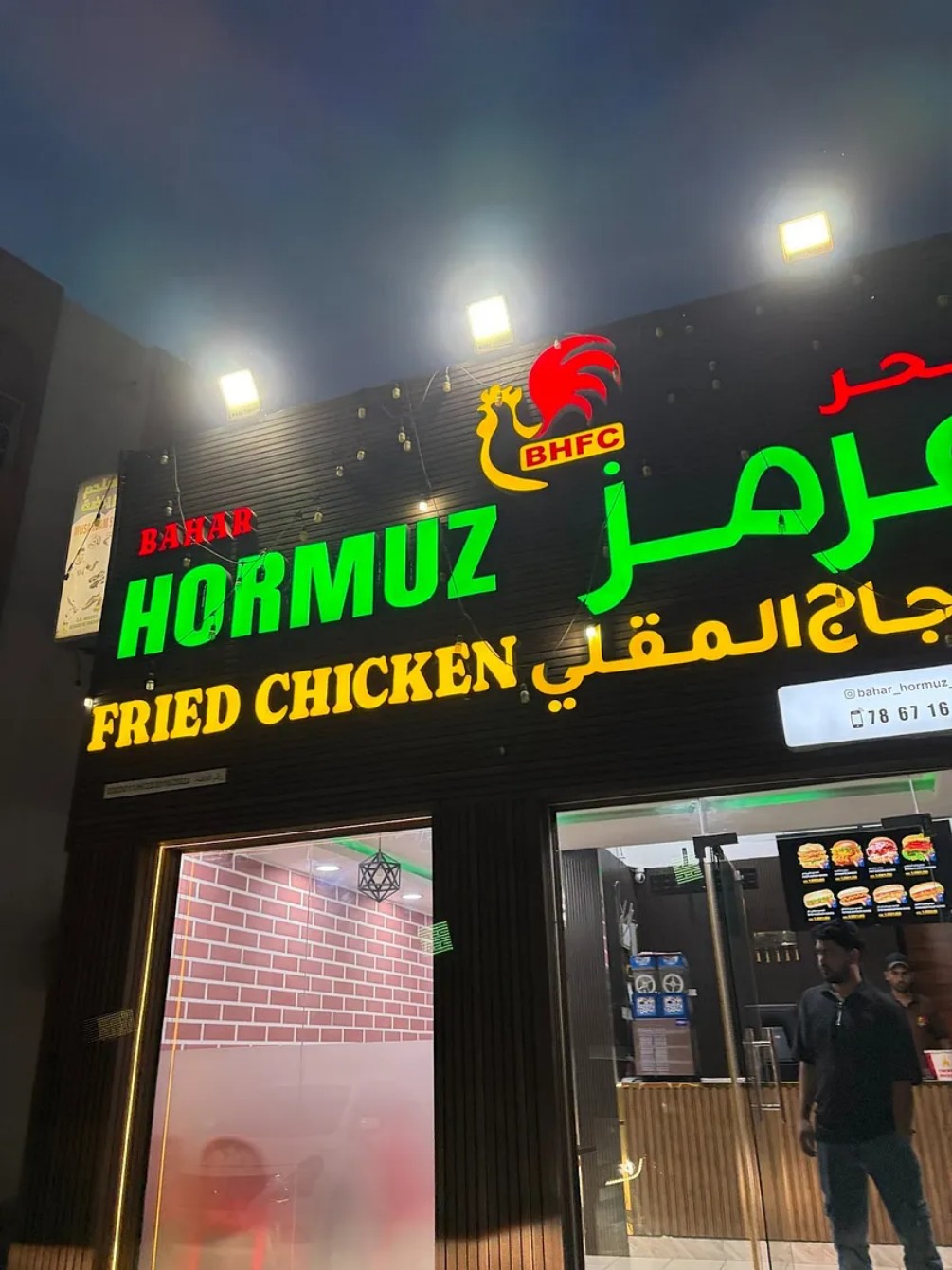
For the rest of my time in Oman I was under surveillance — three guys following me everywhere, the same faces at every turn, a car tailing me with the subtlety of a car that is not trying to be subtle. The staff was aggressively trying to get me to check out. It felt kind of fair. I hired a black SUV for a thousand dollars to take me around for the last few hours — should have been throwing money around from the start, because at these price points people will tell you anything and take you anywhere. Got fried chicken at a place called Hormuz Fried Chicken. It was gas.在阿曼剩余的时间里,我一直处于监视之下——三个人到哪儿都跟着我,每个转角都是同样的面孔,一辆车尾随着我,毫不掩饰,甚至根本没打算掩饰。酒店工作人员在拼命催我退房。说实话,也不能怪他们。我花了一千美元雇了一辆黑色SUV载我在最后几个小时到处转——早该这么花钱了,因为在这个价位上,人们什么都愿意告诉你,哪儿都愿意带你去。在一家叫 Hormuz Fried Chicken 的店吃了炸鸡。味道绝了。
At the border on the way out, the guard’s first words when he saw me: “He’s here.”出境时,边检官看到我的第一句话是:"他在这。"
They searched my bag. One of them picked up the Ray-Bans. “What is this?” “Sunglasses.” He put them down. The microphone kit was under my pants in the back. He moved the clothes, didn’t comment on any of the other contents.他们搜了我的包。其中一人拿起了那副 Ray-Ban。"这是什么?""太阳镜。"他放下了。麦克风套装藏在背包深处的裤子下面。他翻动了衣物,对其他东西没有发表任何评论。
“I guess it was someone else.”"看来是别人吧。"
That’s the story. What follows is different. We spent eight hours debriefing #3 after he got back, cross-referencing what he saw and heard against everything we knew from our own sources, public data and the conversations we’d had with informed parties in the region. The narrative above is told from #3’s point of view because that’s the most honest way to present field reporting. The analysis below is told from ours.以上就是故事本身。接下来的内容性质不同。Analyst #3 返回后,我们用了八个小时对他进行了详尽的汇报复盘,将他的所见所闻与我们自有情报源、公开数据以及与该地区知情人士的对话逐一交叉验证。上述叙事从 #3 的视角讲述,因为这是呈现实地报道最诚实的方式。下面的分析则从我们的视角展开。
The most important takeaway -- and our recommendation to readers -- is to drop biases and binary frameworks. What’s happening is far more complex.最重要的结论——也是我们对读者的建议——是放弃偏见和二元对立框架。正在发生的事情远比那复杂得多。
When we set off, we were under the assumption that the conflict would escalate and the Strait would remain closed off. This trip changed our mind on the latter, but not the former - a view we’d have thought was logically inconsistent before this assignment.出发前,我们假设冲突会升级,海峡将持续封锁。这次实地考察改变了我们对后者的判断,但没有改变对前者的判断——在这次任务之前,我们会认为这种观点在逻辑上是矛盾的。
We also gained a more nuanced understanding of how things could proceed - our base case is less about closed/open and more about the messy outcome where the conflict continues at the same time that traffic through the strait rises. We view this as a symptom of the increasingly multipolar world we now live in, one where US allies are actively negotiating with Iran despite the US being engaged in an active conflict with them.我们也对局势可能的走向有了更细腻的理解——我们的基准情景不再是简单的"关闭/开放"二选一,而是一种更混乱的现实:冲突持续的同时,海峡通行量也在上升。我们认为这是当今日益多极化世界的一个缩影——美国的盟友正在积极与伊朗谈判,尽管美国本身正与伊朗处于实际冲突之中。
And as for the mood on the ground? In the face of huge uncertainty and global attention was human resilience. There has been war here before -- there will be again. The US is interested, as always, in oil. The neighbors are fighting, the risk is real, but life goes on. This too shall pass.至于当地的氛围?面对巨大的不确定性和全球关注的,是人类的韧性。这里以前有过战争——以后还会有。美国的兴趣一如既往在石油。邻国在交战,风险真实存在,但生活仍在继续。一切都会过去。
The most counterintuitive finding from this trip is that hot war and commercial diplomacy are happening at the same time. The rest of the world is adapting and negotiating passage while the US continues with military action. US allies, including France, Greece, and Japan, are all figuring it out.这次考察最反直觉的发现是:热战与商业外交正在同时进行。在美国继续军事行动的同时,世界其他国家正在适应并谈判通行权。美国的盟友——包括法国、希腊和日本——都在各自想办法。
Before, it would have been unlikely to imagine a world where Japan, the EU and other US allies were negotiating with a country the US is directly in conflict with to secure passage while the US maintained footing for an escalation of kinetic warfare. Now, that’s simply how the world works. These countries must deal with the issues imposed, as the US won’t be sorting it out on their behalf. This is what Trump told them to do in his address when he said nations that rely on the strait should “take care of that passage” themselves.在此之前,很难想象这样一个世界:日本、欧盟和其他美国盟友正在与一个美国正在直接交战的国家谈判确保通行权,而美国同时在为动能战争的升级做准备。然而现在,这就是世界运转的方式。这些国家必须自行应对面临的问题,因为美国不会替他们解决。这正是特朗普在讲话中所说的——那些依赖海峡的国家应该"自己照料那条通道"。
This is also what makes us feel that it is distinctly likely that we see both an escalation of the conflict within the next week or so while traffic simultaneously increases through the strait. The strait is not exclusively open or closed as a function of whether the conflict is escalating or de-escalating.这也是为什么我们强烈认为,未来一周左右我们很可能同时看到冲突升级和海峡通行量增加。海峡并非单纯作为冲突升级或降级的函数而开放或关闭。
The Qeshm Island port strikes are the clearest illustration of this. The strikes temporarily slowed movement. During the bombing itself, ships weren’t really moving. But there were passages that same day.格什姆岛港口遭受的空袭最清楚地说明了这一点。空袭暂时减缓了通行。轰炸期间,船只基本没有移动。但就在同一天,仍有船只通过了海峡。
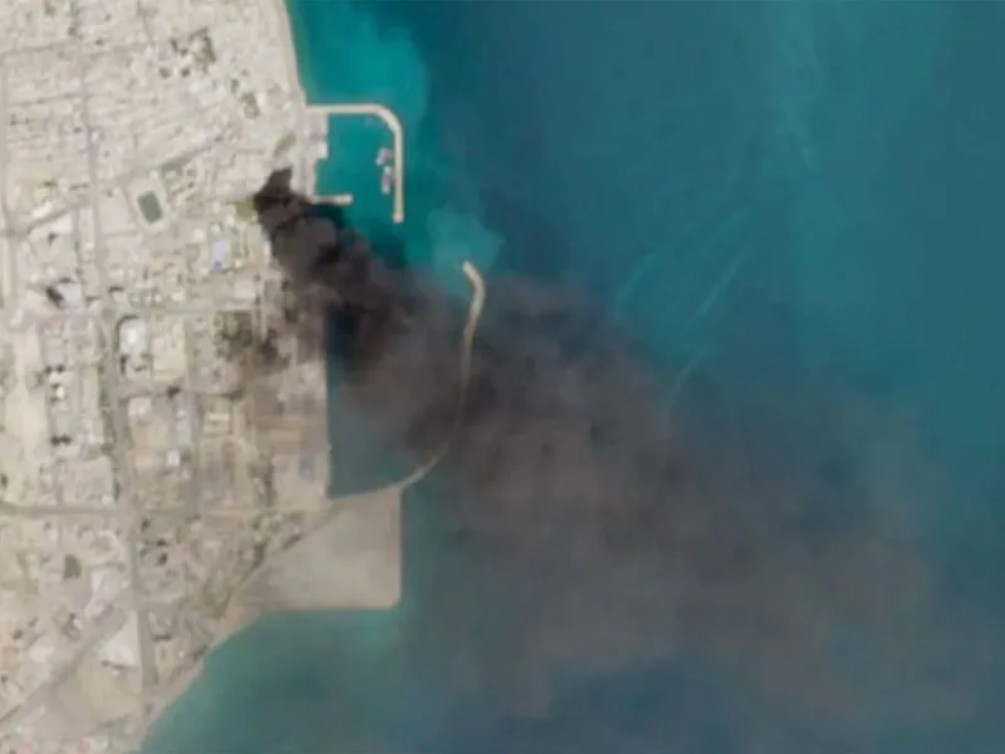
The strikes don’t affect the long-term plan. You could blow the shit out of Qeshm Island and things would slow down, but it wouldn’t change the fundamental trajectory.空袭并不影响长期格局。你可以把格什姆岛炸个稀烂,通行会减缓,但不会改变根本趋势。
Two days after #3 was on the water, a US F-15 and A-10 were shot down over Qeshm. The A-10 crashed into the Persian Gulf. Ships passed through regardless that day, as well.#3 出海两天后,一架美军 F-15 和一架 A-10 在格什姆上空被击落。A-10 坠入波斯湾。那天船只照样通过了海峡。
On April 2nd, at least 15 ships crossed. The day after, more. Not a ton more, but more. People in communities along the strait told us that roughly two weeks before our arrival, the Qeshm-Larak channel was seeing maybe 2 to 5 ships per day. This still pales in comparison to the >100 per day that were crossing before the conflict, but we expect that this is how it will proceed. It will be messy, strait traffic volumes will pick up at the same time that the conflict proceeds.4月2日,至少有15艘船通过。第二天更多。不算多很多,但确实更多了。海峡沿岸社区的居民告诉我们,在我们到达前大约两周,格什姆-拉拉克水道每天大约有2到5艘船通过。这与冲突前每天超过100艘的通行量相比仍然相差甚远,但我们预计趋势将如此持续下去。局面会很混乱,海峡通行量会在冲突持续的同时逐步回升。
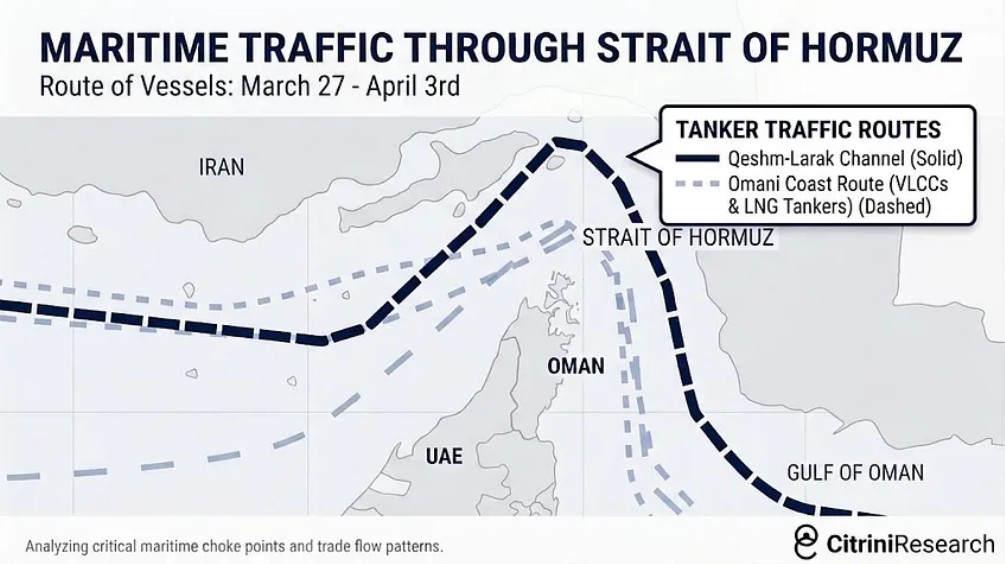
Still, not many VLCCs have passed. In fact, not many vessels larger than Aframax at all have passed. If we keep seeing just LPG carriers and Handy-size tankers transiting, that doesn’t change much. We would still be on a collision course for the global economy. The quickest way to avert that is for the US to allow Iran to run the strait…at least, for now.不过,通过的 VLCCs 仍然不多。事实上,大于 Aframax 级别的船只几乎都没怎么通过。如果我们持续只看到 LPG 运输船和灵便型油轮通行,那对全局的改变不大。我们仍将走在全球经济碰撞的轨道上。最快的避免方式,是美国允许伊朗运营海峡——至少目前如此。
Ships confirmed to be crossing included vessels from India, Malaysia, Japan, Greece, France, Oman, Turkey and China. Chinese vessels were spotted with AIS off, transiting through the Larak-Qeshm channel. We also witnessed what appeared to be the first crossings outside the Qeshm-Larak channel entirely: VLCCs and LNG tankers (empty) hugging the coast of Oman, transiting independently of the Iranian checkpoint.确认通过海峡的船只来自印度、马来西亚、日本、希腊、法国、阿曼、土耳其和中国。有中国船只被发现关闭 AIS 通过拉拉克-格什姆水道。我们还目睹了疑似首批完全绕过格什姆-拉拉克水道的通行:VLCCs 和 LNG 运输船(空载)紧贴阿曼海岸,独立于伊朗检查站通行。
The Greek Dynacom ship we saw went straight through the middle of the strait, the only vessel we saw do that. We have no idea how they pulled it off. George Procopiou, who runs Dynacom, has a history of running dark transits. This confirmed to us, at least, that the Strait of Hormuz is not currently mined in a way that the “booby trap preventing all passage” narrative would suggest, and is consistent with the view of getting the strait back in action. Whether there are deep sea mines that can be activated selectively we, obviously, cannot say.我们看到的那艘希腊 Dynacom 公司的船径直穿过海峡中央,是我们所见唯一这么做的船。我们不知道他们是怎么办到的。经营 Dynacom 的 George Procopiou 有暗中通行的历史。这至少向我们证实,霍尔木兹海峡目前并未像"阻止一切通行的陷阱"这一叙事所暗示的那样布满水雷,这与海峡正在恢复运作的观点一致。至于是否存在可选择性激活的深海水雷,我们显然无法断言。
Iranian smugglers near Larak, whose whole lives consist of running contraband back and forth through the strait, told us they have seen a sharp increase in ships passing recently. Their impression was that nothing random is happening. Rather, all the ships passing through are talking to the IRGC and getting permission. Their expectation, relayed from family connected to the military, is that everything will go back to normal soon.拉拉克岛附近的伊朗走私者——他们一辈子都在海峡来回运送违禁品——告诉我们,最近通过的船只明显增多。他们的印象是,没有什么随机发生的事。所有通过的船都在与 IRGC 沟通并获得许可。他们从与军方有关的家人那里获知的预期是:一切很快会恢复正常。
Could a US ground operation grind this trend back down to a halt? Sure. But a fighter jet getting shot down almost directly above the queue didn’t. Airstrikes on the Qeshm port didn’t. The operation would need to be immense and almost specifically focused on shutting down this traffic, which doesn’t seem to be in anyone’s best interest.美国的地面行动能否将这一趋势打回停滞?当然可以。但一架战斗机几乎在排队通行的船只正上方被击落,没能做到这一点。对格什姆港的空袭也没能做到。这种行动必须规模极大,而且几乎要专门以关停这些通行为目标——这似乎不符合任何一方的最佳利益。
One of the more surprising aspects was how orderly things were. Iran has set up a functional checkpoint in the Strait of Hormuz, routed all approved traffic through a channel between Qeshm and Larak islands (with some exceptions along the coast of Oman and the one Greek ship we saw cross through the middle of the Strait), and is collecting payment for passage. No vessel has used the traditional shipping lanes since mid-March.最令人意外的一点是一切运作得多么有序。伊朗在霍尔木兹海峡建立了一个功能完备的检查站,将所有获批通行引导通过格什姆和拉拉克岛之间的水道(少数例外沿阿曼海岸通行,以及我们看到的那艘希腊船从海峡中间穿过),并对通行收取费用。自三月中旬以来,没有任何船只使用传统航道。
The mechanics work like this: A ship or its country contacts a middleman broker and submits information -- ownership structure, flag, cargo, crew composition, destination. A payment is made: cash, crypto, or (far more commonly than reported) a diplomatic workaround like the unfreezing of Iranian assets held in foreign bank accounts that gets past fears of sanctions.运作机制如下:一艘船或其所属国通过中间人经纪联系伊方,提交信息——所有权结构、船旗、货物、船员组成、目的地。然后支付费用:现金、加密货币,或者(远比报道的更常见)通过外交变通手段,比如解冻伊朗存放在外国银行账户中的资产,以规避制裁担忧。
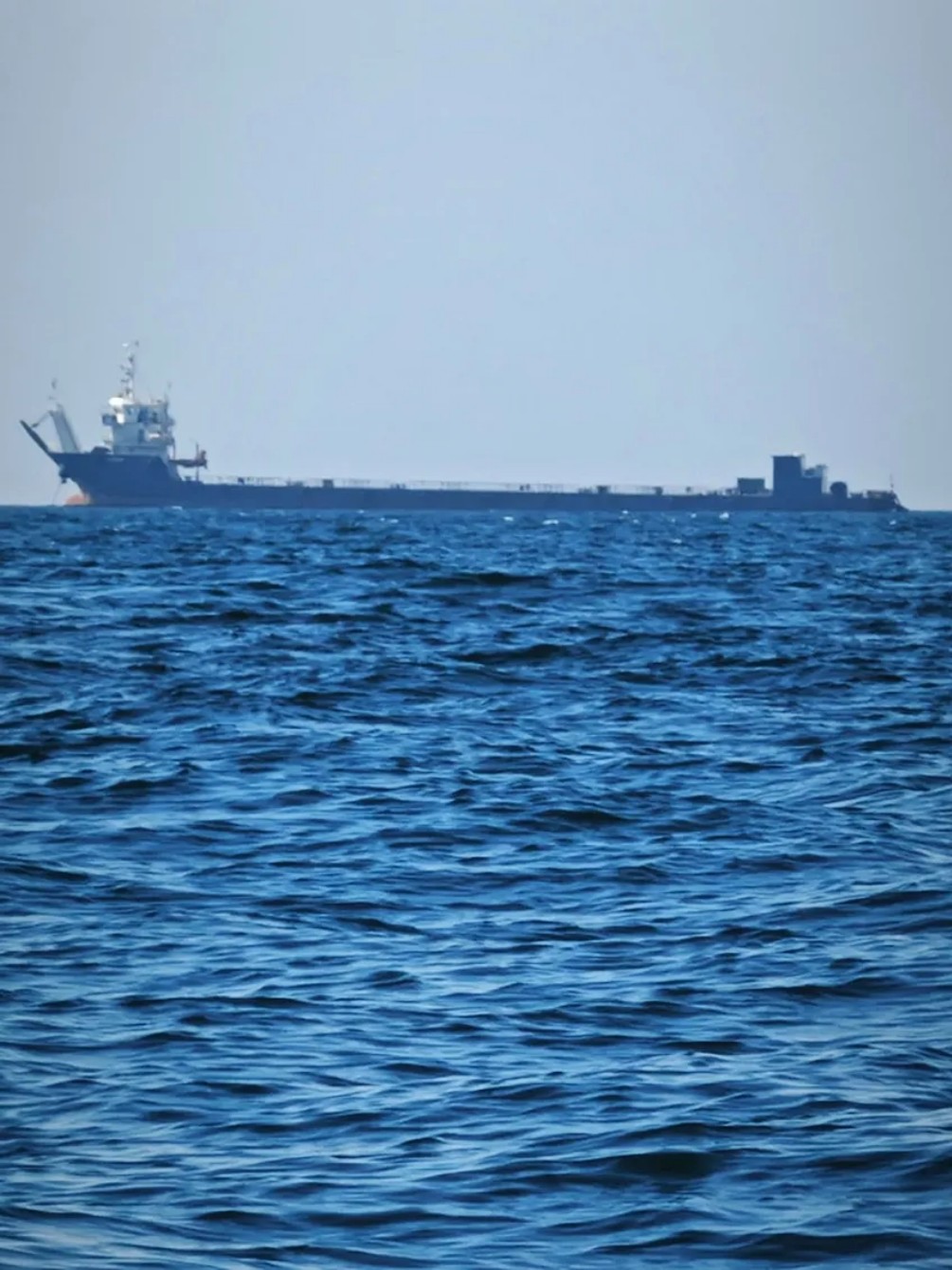
The toll system is enforced through drone and satellite imagery, and ships are approved via stations on Larak island. Enforcement is selective. There’s a real diligence process where the Iranians check whether the vessel is secretly US-aligned. They’re looking at ownership structures and shareholder bases, speaking with the crew. This means it’s not going to be as simple as “X country got approved so we will just fly the flag of X country on our ship”. Iran will be making a concerted effort to ensure the motivation to cut a deal with them is there and that workarounds are minimal.收费体系通过无人机和卫星图像执行,船只通过拉拉克岛上的站点获得批准。执行是有选择性的。伊朗方面有一套真正的审查流程,检查船只是否暗中与美国结盟。他们审查所有权结构和股东构成,与船员交谈。这意味着事情不会简单到"某国获批了,我们就挂某国的旗"。伊朗会竭力确保对方有与其达成交易的真实动机,并尽量堵住变通漏洞。
Once approved, the vessel is granted passage with some form of confirmation. We heard references to a code or password-like system. This applies to both dark transits (AIS off) and AIS-on transits. Nearly all traffic is being routed through Iranian territorial waters, rather than the traditional shipping lanes in Omani waters. If you pass, you get a confirmation code and you’re escorted through. If you don’t pass, you sit.获批后,船只会收到某种形式的通行确认。我们听说有一套类似代码或密码的系统。这适用于暗中通行(AIS关闭)和正常通行(AIS开启)。几乎所有通行都被引导通过伊朗领海,而非阿曼水域中的传统航道。通过审查的船只获得确认码,由护航通过。未通过的,就只能等着。
Perhaps the most important thing, however, is that vessels simply exiting the strait is not enough to have meaningful impact. Vessels must also return to reload cargos. That’s what avoids a crisis here: vessels that are on the friendly or neutral list coming back to reload and keeping the flow of commodities through the strait running with business running seamlessly.然而,最关键的一点或许是:船只仅仅驶出海峡是不够的,还必须返回装载货物。真正避免危机的是:被列入友好或中立名单的船只能够回来重新装货,保持大宗商品通过海峡的持续流动,让贸易无缝运转。
The Payment Myth. The consensus in Western media has been that these tolls are paid in Chinese yuan or cryptocurrency, and that’s partially true. But what #3 learned from multiple sources on the ground is that the diplomatic channel is the dominant mechanism for non-Chinese vessels to get through – circumventing sanction fears -- and it’s significantly underreported. Most of those payments are settled through a specific bank (Bank of Kunlun). The yuan story is real to a small degree but it’s something of a front; those Chinese vessels will likely be able to pass without paying at all. Fear of OFAC sanctions are forcing other countries to find creative ways to pay - they’re not necessarily paying in CNH. India secured passage through a diplomatic arrangement. France appears to have done the same, consistent with Macron’s positioning against the US at the Security Council.关于支付的迷思。西方媒体的共识是,这些过路费用人民币或加密货币支付,这部分属实。但 #3 从多个当地信息源了解到的是,对于非中国船只而言,外交渠道才是主要的通行机制——绕开制裁担忧——而这一点被严重低估了。大部分此类支付通过一家特定银行(昆仑银行)结算。人民币支付的说法在小范围内属实,但某种程度上是一层幌子;那些中国船只很可能根本不需要付费就能通过。对 OFAC 制裁的恐惧迫使其他国家寻找创造性的支付方式——他们不一定是在用离岸人民币支付。印度通过外交安排确保了通行权。法国似乎也是如此,这与马克龙在安理会上反对美国的立场一致。
Insurance vs. Getting Blown Up. A popular narrative regarding crossing the strait has been that the only thing holding back ships from crossing is insurance. To put it directly, that’s not the case. The primary concern is getting blown up. A secondary, lesser concern is paying Iran to cross and then getting popped on violating OFAC sanctions. That’s why, right now, there’s a real shot of an off-ramp where Trump demands that Iran opens the strait, Iran works with Oman to implement a toll and ships feel safe enough with the IRGC’s guarantee to cross.保险 vs. 被炸沉。关于海峡通行,一个流行叙事是:阻止船只通过的唯一因素是保险。直说吧,事实并非如此。首要顾虑是被炸沉。次要的、较小的顾虑是向伊朗付费通行后被追究违反 OFAC 制裁。正因如此,目前确实存在一个现实的退出匝道:特朗普要求伊朗开放海峡,伊朗与阿曼合作实施收费制度,船只在 IRGC 担保下感到足够安全从而通行。
If the US, at this point, demanded a full opening without the toll and, at the same time, launched an operation with the intent of preventing Iran from running a toll, the traffic would grind to a halt. And if that operation took longer than 3-4 weeks, we’d be looking down the barrel of a catastrophe. Right now, the net hit to global commercial oil stocks is estimated at 10.6 million barrels per day. Habshan-Fujairah has been forced offline twice, and even accounting for pipeline redirections, remaining Hormuz flows, SPR releases, imports of sanctioned oil and builds in mideast oil stocks, it is still generous to estimate that if the Strait is still only transited by 15 ships a day by the end of April the situation will be disastrous. Everyone involved knows this.如果美国此时要求全面开放、取消收费,同时发动旨在阻止伊朗运营收费的军事行动,通行将戛然而止。如果这一行动持续超过三到四周,我们将面临一场灾难。目前,全球商业石油库存的净损失估计为每天1060万桶。哈布善-富查伊拉管道已两次被迫停运,即便考虑管道改线、剩余霍尔木兹通行量、战略石油储备释放、受制裁石油进口以及中东石油库存增加,保守估计,如果到四月底海峡每天仍只有15艘船通行,局面将是灾难性的。所有相关方都清楚这一点。
We believe that this is the situation that is most tenable – US escorts are less of a reassurance than IRGC permission right now. No ships with IRGC permission have been struck. Whether the US allows Iran to exert this toll on the strait indefinitely is another matter entirely, but we feel in the interim it is likely that no direct action is taken to prohibit it. As long as the toll allows for some degree of passage out, it buys enough time for a solution that solves for two-way flow to be reached before an economic disaster takes place.我们认为这是最可行的局面——目前美军护航给人的安心感不如 IRGC 的许可。没有任何获得 IRGC 许可的船只遭到袭击。美国是否会无限期允许伊朗对海峡征收通行费完全是另一回事,但我们认为短期内不太可能采取直接行动加以阻止。只要收费制度允许一定程度的通行,就能争取到足够时间,在经济灾难发生之前找到解决双向通行问题的方案。
Every conversation Analyst #3 had in the region converged on one point: Iran does not want the strait closed.Analyst #3 在该地区的每一次交谈都指向同一个结论:伊朗不想让海峡关闭。
All non-US countries view a non-functional strait as a catastrophe and Iran wants things to return to normal as fast as possible, provided it occurs in a way that asserts Iranian sovereignty. The best propaganda for Iran is a functioning strait where they look like the reasonable stewards of global trade, while the US looks like the disruptive force. If you look at the public messaging from Iranian officials, they’re all trying to paint the US empire as a low-IQ malfunctioning thing, while positioning themselves as stewards for the world. The overarching goal from the Iranian side appears to be isolating the American empire and demonstrating that they can work with the rest of the world without the US. Shutting off the strait entirely again is akin to detonating a nuclear bomb in a war against another nuclear power – it’s an absolute last resort.所有非美国国家都将海峡停摆视为灾难,伊朗希望局势尽快恢复正常——前提是以彰显伊朗主权的方式实现。对伊朗来说最好的宣传就是:海峡正常运转,他们看起来像是全球贸易的负责任守护者,而美国看起来才是破坏性力量。如果你看伊朗官员的公开表态,他们都在试图把美国帝国描绘成一个低智商的失灵机器,同时将自己定位为世界的守护者。伊朗方面的总体目标似乎是孤立美国帝国,证明他们能够在没有美国参与的情况下与世界其他国家合作。再次完全封锁海峡,就如同在与另一个核大国的战争中引爆核弹——那是绝对的最后手段。
The Omani official we met compared Iran’s long-term vision for Hormuz to Turkey’s management of the Bosphorus and Dardanelles under the Montreux Convention. That framework has governed the Turkish Straits since 1936 with Turkey holding full sovereignty over the waterway and Commercial vessels passing freely. Warships are subject to restrictions, notifications and tonnage limits that Turkey enforces at its discretion. In wartime, Turkey can close the straits entirely to belligerent navies. The US, notably, is not a signatory. The arrangement has held for nearly ninety years, widely regarded as one of the more durable examples of rules-based order governing a strategic chokepoint.我们见到的阿曼官员将伊朗对霍尔木兹的长期愿景类比为土耳其根据蒙特勒公约对博斯普鲁斯海峡和达达尼尔海峡的管理。该框架自1936年起治理土耳其海峡,土耳其对水道拥有完全主权,商船自由通行。军舰则受到限制、通报要求和吨位上限的约束,由土耳其酌情执行。战时,土耳其可以完全关闭海峡禁止交战国海军通过。值得注意的是,美国不是该公约的签署国。这一安排已维持近九十年,被广泛认为是基于规则的秩序治理战略咽喉要道最持久的范例之一。
Iran views what it’s building now as the seed of something similar. Not a permanent blockade, but a sovereignty regime where Tehran controls the terms of passage, collects a toll, restricts hostile military vessels and permits commercial traffic under its own rules.伊朗将其正在构建的体系视为类似框架的雏形。不是永久封锁,而是一种主权制度——德黑兰控制通行条件、收取通行费、限制敌对军事船只,并按自己的规则允许商业通行。
This is an important framing for investors because it tells you what the endgame looks like if the conflict doesn’t end in total Iranian defeat. If the precedent Iran is reaching for is a framework that NATO member Turkey has operated successfully within for the better part of a century, do we have to start considering what that world looks like? Whether the US would ever accept that comparison is another question. In the short term, though, the options are a closed strait that will cause an economic catastrophe in the next 2-3 weeks, or this. But the fact that Iran is framing it this way tells you a lot about their confidence level and their intended audience: not Washington, but everyone else.对投资者而言,这是一个重要的认知框架,因为它揭示了如果冲突不以伊朗彻底战败告终,终局将会是什么样子。如果伊朗寻求的先例是一个北约成员国土耳其已成功运作了近一个世纪的框架,我们是否需要开始思考那个世界是什么样的?美国是否会接受这种类比是另一个问题。但在短期内,选择要么是一个将在未来两到三周内引发经济灾难的封闭海峡,要么是这种模式。而伊朗以这种方式来框定局面,本身就说明了很多——关于他们的信心水平,以及他们的目标受众:不是华盛顿,而是其他所有人。
While we didn’t speak with any Iranian decision makers, obviously, we did speak with Omani officials who have firsthand knowledge as to their view. It’s easy enough to know how the US views this conflict, but it seems valuable to know how the other side is performing calculus on it.我们当然没有与任何伊朗决策者直接交谈,但我们确实与掌握第一手信息的阿曼官员进行了对话,了解了伊方的观点。美国如何看待这场冲突不难了解,但了解另一方如何进行战略计算似乎更有价值。
Iran is viewing this as a wager with decent odds. In two out of three scenarios, they come out better off. Of course, in the third one, Iran doesn’t exist anymore.伊朗将此视为一场胜率不错的赌博。三种情景中的两种,他们会获得更好的处境。当然,在第三种情景中,伊朗将不复存在。
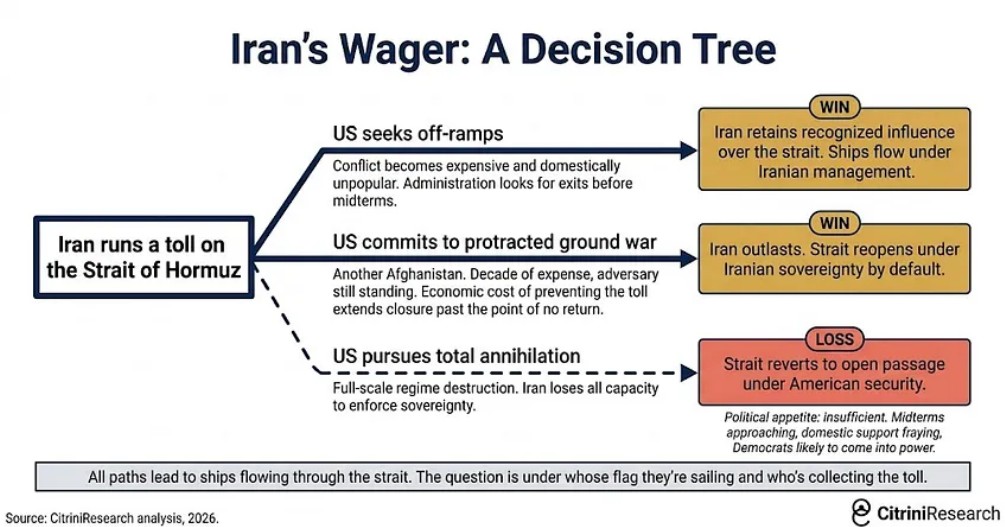
All of the paths lead to ships flowing through the strait, though. The question is under whose flag they’re sailing and who’s collecting the toll, if any.所有路径最终都通向船只流经海峡。问题在于它们挂的是谁的旗,以及谁在收取通行费——如果有的话。
The impression we got from our conversations with both the Omani official and villagers with close familial ties to the Iranian military was that, despite the significant losses they’ve taken, Iranian leadership is still centrally organized. There are no loose cannons at the top. The operations do not lack central coordination. This was consistent across every source.从我们与阿曼官员以及与伊朗军方有密切家族关系的村民的交谈中,我们得到的印象是:尽管遭受了重大损失,伊朗领导层仍保持着中央集权式的组织运作。高层没有失控的鹰派。行动并不缺乏统一协调。这一判断在每一个信息源那里都得到了一致印证。
The Omani official also made the point that Iran’s behavior during the conflict — "lashing out, but with restraint" — is not the hallmark of a scattered or fractured regime. The proof: no ship that received IRGC clearance to transit has been hit. And the Houthis — the dog that hasn’t barked — are being actively restrained. If Iran had lost operational control of its proxies, the Houthis would be the first to demonstrate it. They haven’t. The targets they could hit but haven’t are as informative as the ones they have. Restraint requires hierarchy, and hierarchy means the toll booth has a single operator.这位阿曼官员还指出,伊朗在冲突中的行为——"反击,但有节制"——并非一个分裂或碎片化政权的特征。证据是:没有任何获得 IRGC 通行许可的船只遭到袭击。而 Houthis——那条没有叫的狗——正在被主动约束。如果伊朗失去了对其代理人的作战控制,Houthis 会是第一个暴露这一点的。但他们没有。他们能打击却没有打击的目标,与他们实际打击的目标一样具有信息量。克制需要层级体系,而层级体系意味着收费站只有一个操作者。
Iran and Oman are working together to manage and police the strait. The Omanis view the strait as a shared responsibility. There were Iranian officials in Oman at the time of our visit, discussing management protocols, although we did not attempt to speak with them for obvious reasons.伊朗和阿曼正在共同管理和巡护海峡。阿曼方面将海峡视为共同责任。我们到访时,有伊朗官员在阿曼讨论管理协议,不过出于显而易见的原因,我们没有试图与他们交谈。
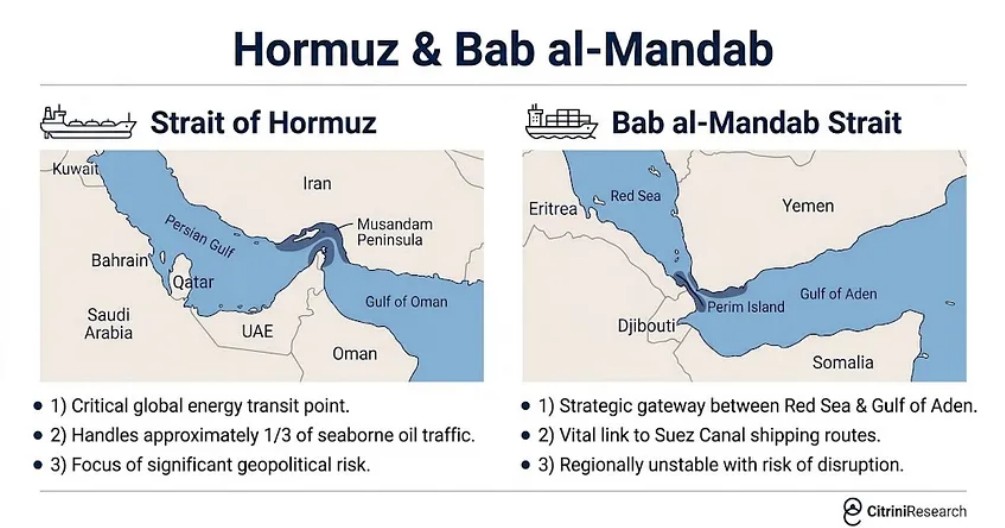
One of the most interesting pieces of intelligence from the trip: the Houthis are being actively restrained by Iran. This was told to us by a source in the Omani government and independently corroborated by our sources in military and government positions in the region.此行最有价值的情报之一:Houthis 正在被伊朗主动约束。这一信息由阿曼政府的一位消息源告知我们,并被我们在该地区军事和政府岗位上的其他消息源独立证实。
The Houthis are historically first in any fight. Look at their track record against the UAE and Saudi Arabia. They’re Iran’s most aggressive proxy, and yet compared to Hezbollah, which is extremely active, the Houthis have been conspicuously quiet on Red Sea shipping. They’ve resumed launching missiles at Israel. They have not attempted to close the Bab al-Mandab.Houthis 历来是冲在最前线的。看看他们对抗阿联酋和沙特阿拉伯的记录。他们是伊朗最具攻击性的代理人,然而与极为活跃的真主党相比,Houthis 在红海航运问题上异常安静。他们恢复了向以色列发射导弹。但他们没有试图封锁曼德海峡。
That’s deliberate. Iran is holding the Bab al-Mandab card in reserve, deploying it only if the conflict escalates to the point where Tehran needs maximum economic pressure. The Iranians are playing a hierarchy game. The fact that it hasn’t been played yet is itself a signal of how calculated Iran’s escalation ladder is. They’re negotiating for sovereignty by letting ships through Hormuz and not holding the entire world hostage by directing the Houthis to seal off the Red Sea.这是刻意为之。伊朗将曼德海峡这张牌留作储备,只有在冲突升级到德黑兰需要施加最大经济压力时才会动用。伊朗人在玩一个层级博弈。这张牌尚未打出这件事本身,就是伊朗升级阶梯有多精于计算的信号。他们通过让船只通过霍尔木兹来谈判主权,而不是指挥 Houthis 封锁红海来挟持全世界。
If that changes, we’ll know the off-ramps have closed.如果这一点发生变化,我们就知道退出通道已经关闭了。
Throughout this conflict, the Iranians have shown a decent level of restraint. The Hormuz situation only started after a first war ended, a new war started, and their own internal red lines were crossed. That said, given where the US war path is heading, this level of Houthi escalation is possible.在整场冲突中,伊朗人展现了相当程度的克制。霍尔木兹局势是在第一场战争结束、新的战争开始、且他们自身的内部红线被突破之后才发展到现在这一步的。话虽如此,鉴于美国目前的战争路径走向,Houthis 升级行动的可能性是存在的。
What you’ll see happening, and this was told to us directly by a source in the Omani Governor’s office, is an uptick in traffic alongside continued ground conflict in Iran. Everyone stuck here isn’t trying to stay stuck, they are trying to keep moving. The ground operations may or may not continue. Everyone else is trying to get on with their lives.接下来你会看到的情况——这是阿曼总督办公室的一位消息人士直接告诉我们的——是海峡通行量逐步回升,同时伊朗境内的地面冲突仍在持续。所有滞留在这里的人并不是甘愿困在原地,而是在想方设法继续前行。地面军事行动可能会继续,也可能不会。其他所有人都在努力恢复正常生活。
The consensus from everyone we spoke to was this: American and American-aligned vessels are going to have a hard time crossing for the duration of the conflict. But everyone else is queuing up for approval.我们接触的每一位信源都达成了同一个共识:在冲突持续期间,美国及其盟友的船只将很难通过海峡。但其他所有国家都在排队申请通行许可。
The list of approved nations is expanding fast. On March 26, Iran granted passage to five countries: China, Russia, India, Iraq, and Pakistan. Within a week, Malaysia, Thailand, the Philippines, France, and Japan had all secured access. We expect this list to keep growing as the rest of the world decides that guaranteeing its own energy supply is worth the diplomatic cost of dealing with Tehran.获批通行的国家名单正在迅速扩大。3月26日,伊朗向五个国家开放了通行权:中国、俄罗斯、印度、伊拉克和巴基斯坦。不到一周,马来西亚、泰国、菲律宾、法国和日本也相继获得了通行许可。我们预计这份名单将持续扩展,因为世界其他国家正逐渐认定,保障自身能源供应值得为与德黑兰打交道付出外交代价。
We would be very surprised to see another EU ship struck over the rest of the conflict unless something drastically changes.除非局势发生重大变化,否则我们认为在冲突剩余时间内不太可能再有欧盟船只遭到袭击。
Our confidence in the strait gradually reopening is as high as it can be without certainty. It was the overwhelming conclusion driven by every experience and conversation on this trip. The range of outcomes reduces to this: either the US sends Iran to the stone age, in which case they lose all capacity to enforce sovereignty and the strait reverts to open passage under American security. Or the conflict drags on, becomes expensive and unpopular, and Iran gets some version of what it wants — the strait reopening under Iranian management.我们对海峡逐步重新开放的信心已接近能达到的最高水平——只是还无法称之为确定。这是此行每一次经历和对话所共同指向的压倒性结论。结果的范围可以归纳为两种:要么美国将伊朗打回石器时代,使其丧失全部主权执行能力,海峡在美国安全保障下恢复自由通行;要么冲突旷日持久、代价高昂且民意反弹,伊朗在某种程度上达成其诉求——海峡在伊朗管理下重新开放。
Meanwhile, the path of least resistance for every country that isn’t America is to cut a deal with Iran and keep moving.与此同时,对于美国以外的每一个国家而言,阻力最小的路径就是与伊朗达成协议,继续前行。
Don’t worry - we haven’t forgotten why we exist. Exciting stories from Analyst #3 aside, we are, first and foremost, investment research analysts. The entire purpose of our voyage has been to give us better information to invest upon.别担心——我们没有忘记自己为何存在。抛开 Analyst #3 那些精彩的故事不谈,我们首先也是最根本的身份,是投资研究分析师。这次远行的全部目的,是为我们提供更优质的信息来指导投资决策。
In our January Macro Memo, we began paying attention to the geopolitical tensions that had been rising since the Fordow operation. We did the same thing that we are attempting to do now – find trades that don’t necessarily have to rely on a specific conflict outcome in order to have upside. We settled on a basket of oil and product tankers, heavily overweighting the ETF tracking tanker rate futures – Breakwave Tanker Shipping (BWET US).在一月份的宏观备忘录中,我们开始关注自福尔多行动以来不断升级的地缘政治紧张局势。我们当时做的事情与现在尝试做的一样——寻找那些不必依赖特定冲突结果也能获得上行空间的交易。最终我们选定了一篮子油轮和成品油轮股票,并大幅超配了追踪油轮运价期货的 ETF——Breakwave Tanker Shipping(BWET US)。
“There’s a more interesting trade (with more non-Iran tailwinds) in the tankers. The structural setup here is more compelling than a simple geopolitical punt. There are a confluence of factors: record levels of Iranian crude sitting on tankers, an aging global fleet, tightening Western sanctions on shadow shipping, and a VLCC market already trading at multi-year highs.”"更有意思的交易(且有更多与伊朗无关的顺风因素)在油轮板块。这里的结构性设置比简单的地缘政治押注更具说服力。多重因素交汇:创纪录的伊朗原油滞留在油轮上、全球船队老龄化、西方对影子船队的制裁收紧,以及 VLCC 市场运价已处于多年高位。"
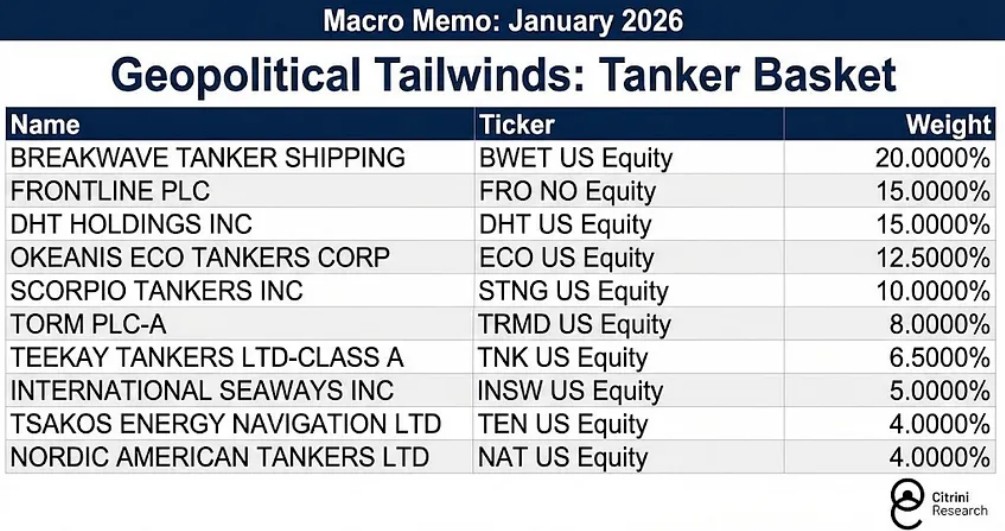
This performed well.这笔交易表现良好。
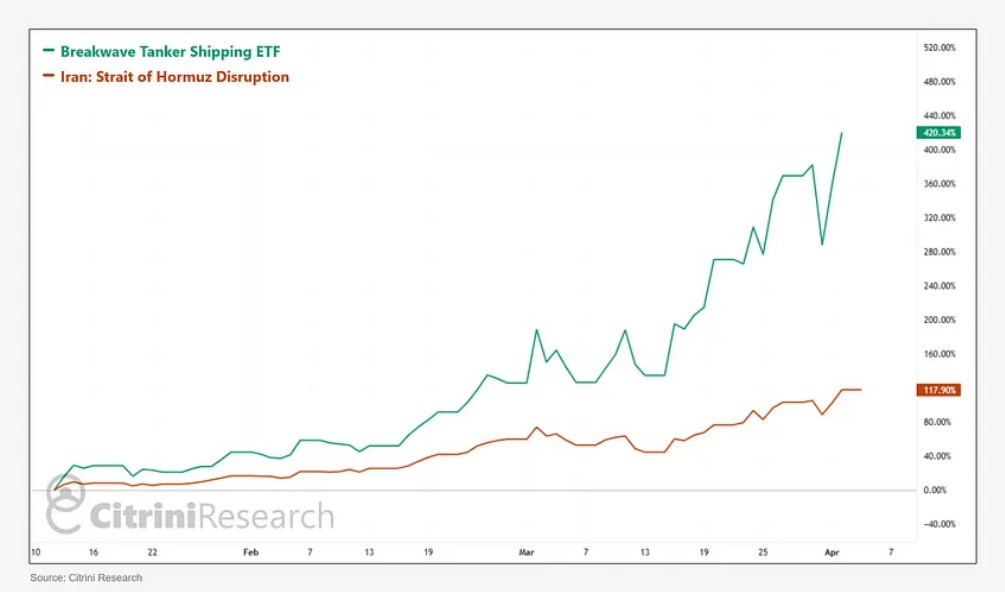
We feel that the tankers have yet to put a top in. In nearly every scenario, we see persistently elevated rates. Tanker companies are likely to continue printing money even if the Strait were to open completely tomorrow. Still, it’s undeniable that with the momentum these names have picked up (BWET has more than quadrupled) there will be heightened volatility and they’ll trade off of headlines in the short term independent of their long term prospects.我们认为油轮板块尚未见顶。在几乎所有情景下,我们都预期运价将持续处于高位。即使海峡明天就完全开放,油轮公司也很可能继续赚得盆满钵满。尽管如此,不可否认的是,这些标的积累了巨大涨幅(BWET 已翻了四倍以上),短期内波动性将显著加剧,并将跟随新闻标题波动,而非反映其长期前景。
That’s why we created our expanded “Iran Conflict Beta” basket that we shared with subscribers in our chat here. This had a similar goal – how can we extrapolate what has already happened in terms of damage to facilities in order to put together a basket that will continue to benefit even if the conflict were resolved tomorrow.这正是我们创建扩展版「伊朗冲突 Beta」篮子并在订阅者群组中分享的原因。目标类似——如何根据已经发生的基础设施损毁,构建一个即使冲突明天就解决也能继续受益的组合。
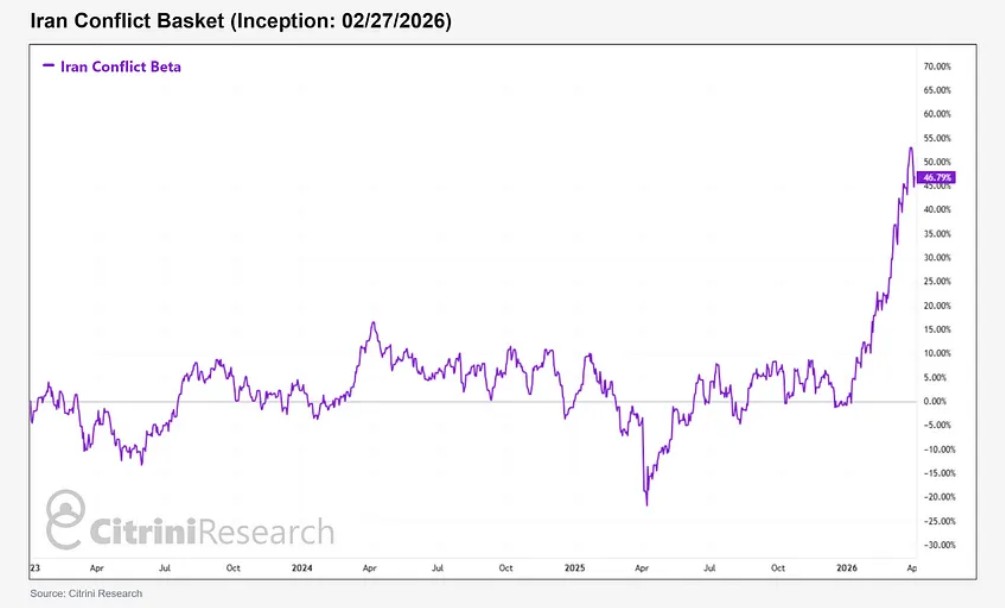
Since inception, the basket has climbed +17%.自建仓以来,该篮子已上涨 +17%。
It is clear from the majority of our conversations that the damage to oil refining and gas processing infrastructure has been significant and drastically underreported. Additionally, the refined products market is significantly tighter than the crude oil market at the present moment – which is why this basket overweights refiners and products. However, we’re also expecting at least front month oil prices to go down as traffic opens back up. We feel the most asymmetric of these areas remains in US petrochemicals.从我们的大多数对话中可以明确看出,炼油和天然气处理基础设施受到的损害是重大的,且被严重低估了。此外,当前成品油市场的紧缺程度远超原油市场——这也是该篮子超配炼厂和成品油标的的原因。不过,我们也预期随着通行量恢复,至少近月原油价格将有所回落。我们认为最具不对称性的领域仍在美国石化板块。
We don’t feel enough conviction to forecast the short term direction for the US equity market, which is not solely a function of the outcome of this conflict. From a historical perspective, there’s a reasonable dispersion of outcomes.我们对美国股市的短期方向缺乏足够信心做出预测,因为股市走势并不完全取决于这场冲突的结果。从历史角度看,结果的分布相当分散。
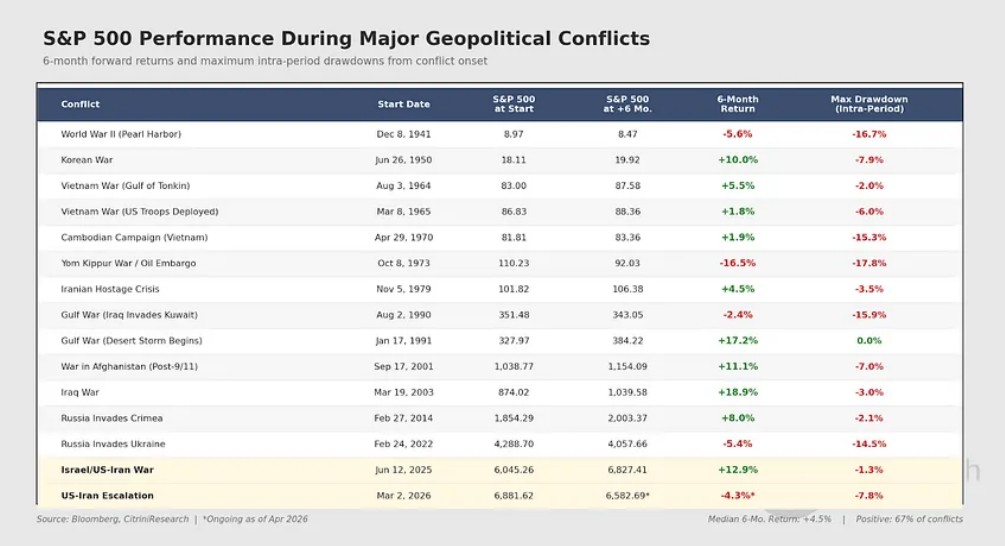
If we are wrong about the traffic in the strait continuing to trend upwards, and it goes back to being effectively closed rather than continuing to trend up through mid-late April it’s very likely that global equities would go down significantly (~15-20%). Our base case right now is that equities will continue to experience heightened volatility as the conflict escalates and proceeds, but that concerns over a global energy crisis will give way to a more nuanced view of increased traffic through the strait with elevated (but not catastrophic) prices in tandem.如果我们对海峡通行量继续上升的判断是错误的,而海峡实际上重新回到近乎关闭的状态,而非在四月中下旬继续改善,那么全球股市很可能将大幅下跌(约 15-20%)。我们当前的基准情景是:随着冲突升级和推进,股市将继续经历加剧的波动,但对全球能源危机的担忧将逐渐让位于更细致的认知——海峡通行量上升,价格虽处于高位但不至于灾难性。
Damage to Gulf petrochemical infrastructure has impacted this market structurally, and we see that coming up against a potential cyclical inflection that could make this the most asymmetric position. US petrochemical companies, who have uninterrupted access to cheap domestic feedstock, will greatly benefit from the global dislocation and surging prices.海湾石化基础设施受到的损害已从结构上影响了这一市场,而我们看到这正与一个潜在的周期性拐点叠加,可能使其成为最具不对称性的头寸。美国石化公司拥有不间断的廉价国内原料供应,将从全球供应错配和价格飙升中大幅受益。
“We were already beginning to see market signs of improvement in the first quarter before the Middle East conflict began. And now pricing actions and supply dynamics have evolved at a very rapid and constructive pace [...] and in March already, we have announced price increases in every business in every region [...]"在中东冲突爆发之前,我们在第一季度就已开始看到市场改善的迹象。如今,定价行为和供给动态正以非常快速且具建设性的节奏演变……仅在三月,我们就已在每个业务、每个地区宣布了提价……
Global logistics have become uncertain with up to 50% of polyethylene supply either offline, constrained, or being impacted following the events in the Middle East. In addition, inventory levels are historically low across the value chain.”全球物流已变得充满不确定性,中东事件发生后,高达 50% 的 polyethylene 供应处于停产、受限或受影响状态。此外,整个价值链的库存水平处于历史低位。"
Dow CEO James Fitterling, 3/18/26Dow CEO James Fitterling,2026年3月18日
Dow’s polyethylene $0.10 price hike in March, has been followed by a $0.30 price hike in April (double the previously announced $0.15 expectation).Dow 在三月实施的 polyethylene 每磅加价 $0.10 之后,四月又宣布了 $0.30 的提价(是此前宣布的 $0.15 预期的两倍)。
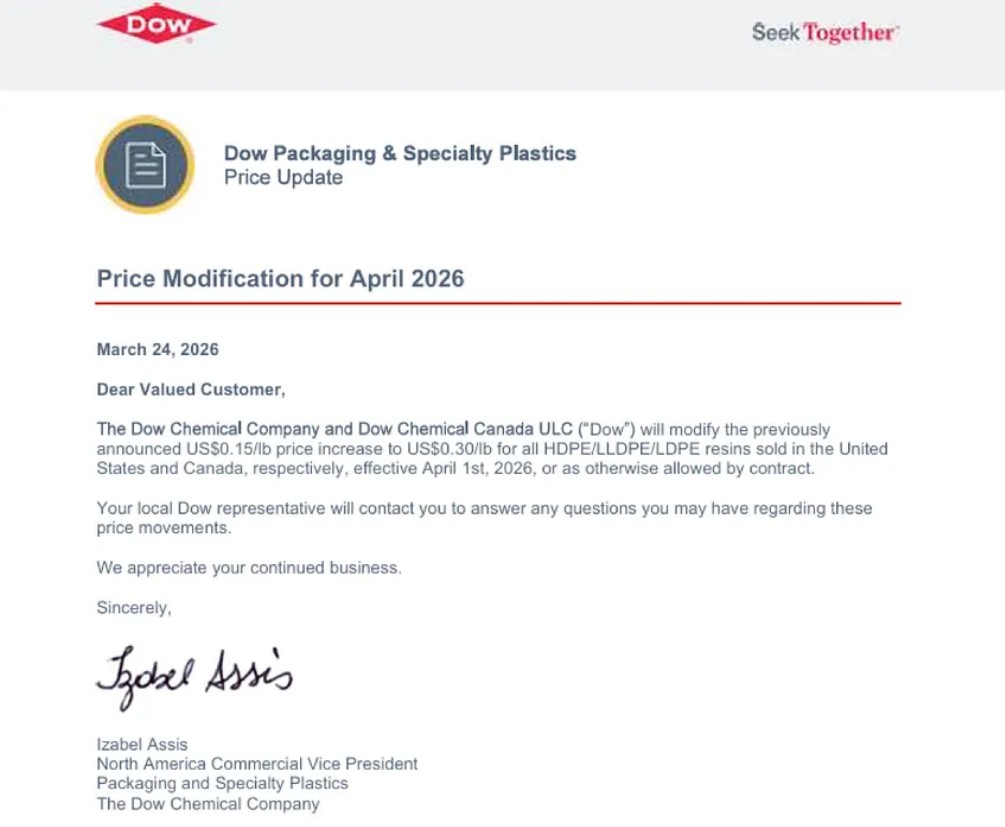
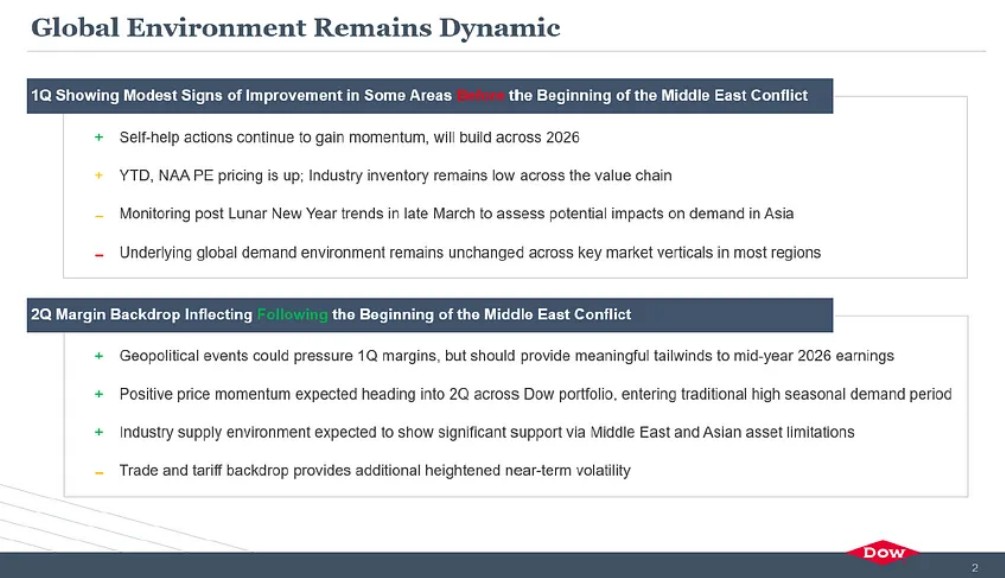
Last week, Dow’s CEO James Fitterling predicted it could take 250 - 275 days for the supply to normalize even after the Strait of Hormuz reopens as shipments of oil, natural gas and fertilizer take priority.上周,Dow CEO James Fitterling 预测,即使霍尔木兹海峡重新开放,由于石油、天然气和化肥运输将获得优先权,供应恢复正常可能需要 250 至 275 天。
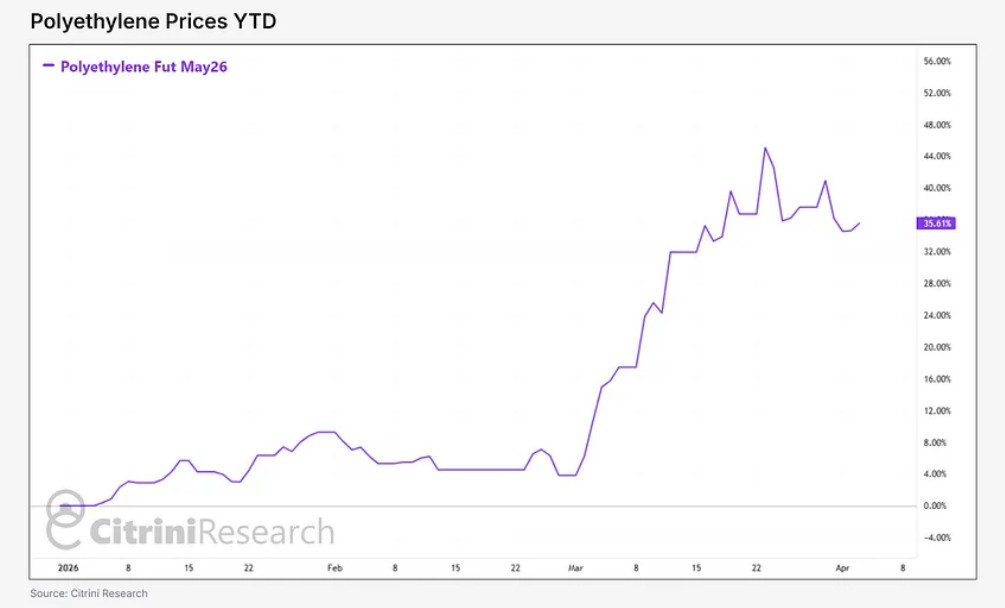
The capacity destruction is real and the rebuild timeline is measured in years, not quarters. We opt for US-based producers who sit on the right side of this: Dow (DOW US) and Westlake (WLK US) are the primary positions.产能的毁损是真实存在的,重建周期以年计而非以季度计。我们选择站在有利一侧的美国本土生产商:Dow(DOW US)和 Westlake(WLK US)是核心持仓。
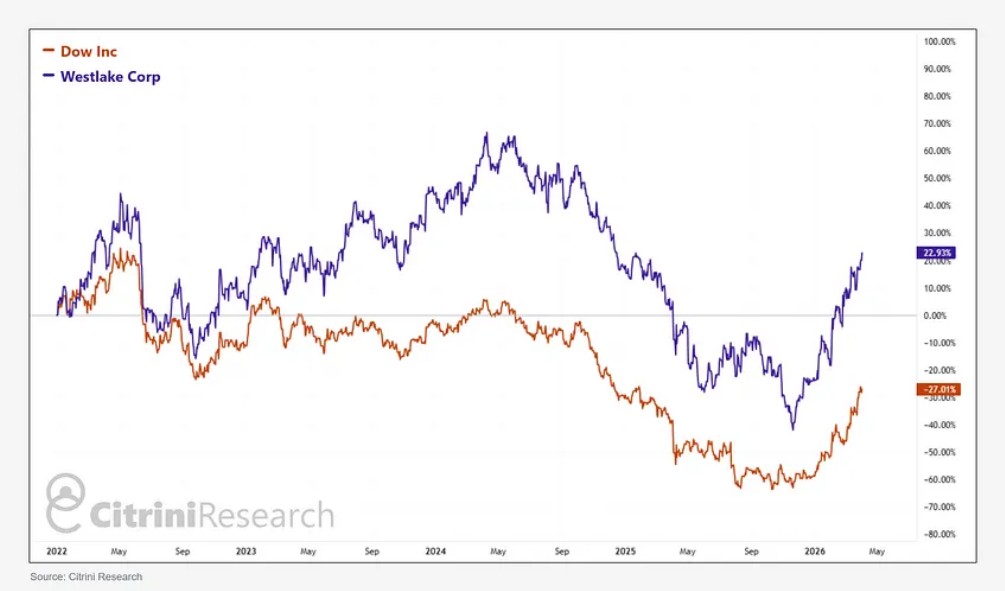
Even if the strait were to fully open tomorrow, we don’t think prices are going back down to where they were before the conflict. That’s pretty meaningful for stocks that are still in 50% drawdowns from their highs.即使海峡明天完全开放,我们也不认为价格会回到冲突前的水平。对于那些仍较高点回撤 50% 的股票而言,这意味着相当可观的上行空间。
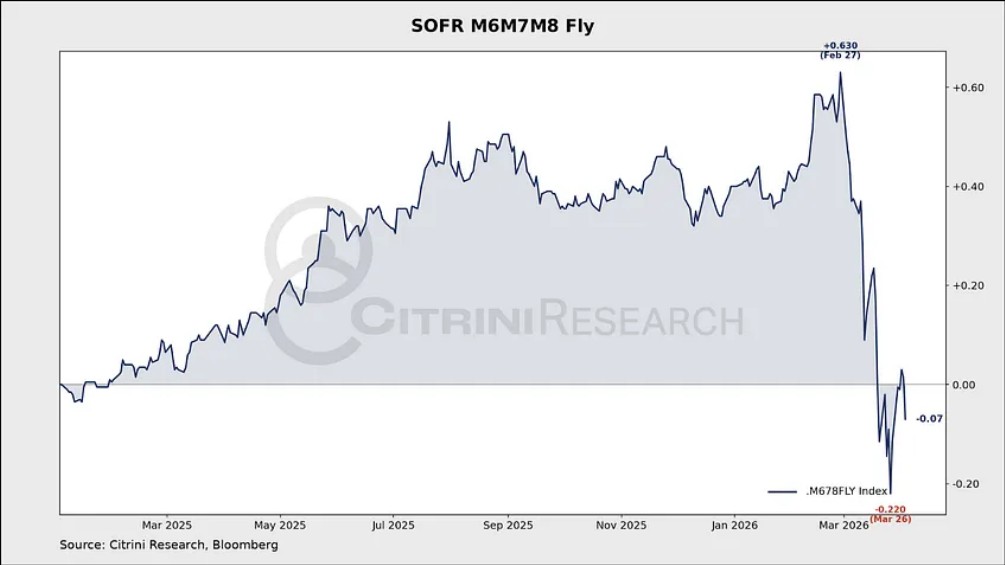
About two weeks ago, we put on a trade that pairs a short on ES with a long on SFRH7. We still feel that the Fed will look through the impact of the conflict and not rush to raise rates, but the overreaction that brought SFRH7 down to 96.05 has resolved somewhat and it now sits around 96.40. From here, we find the curve interesting.大约两周前,我们建立了一个做空 ES、做多 SFRH7 的配对交易。我们仍然认为美联储将选择「看穿」冲突影响而非急于加息,但此前将 SFRH7 打压至 96.05 的过度反应已有所修复,目前价格在 96.40 附近。从当前位置看,我们认为利率曲线颇具吸引力。
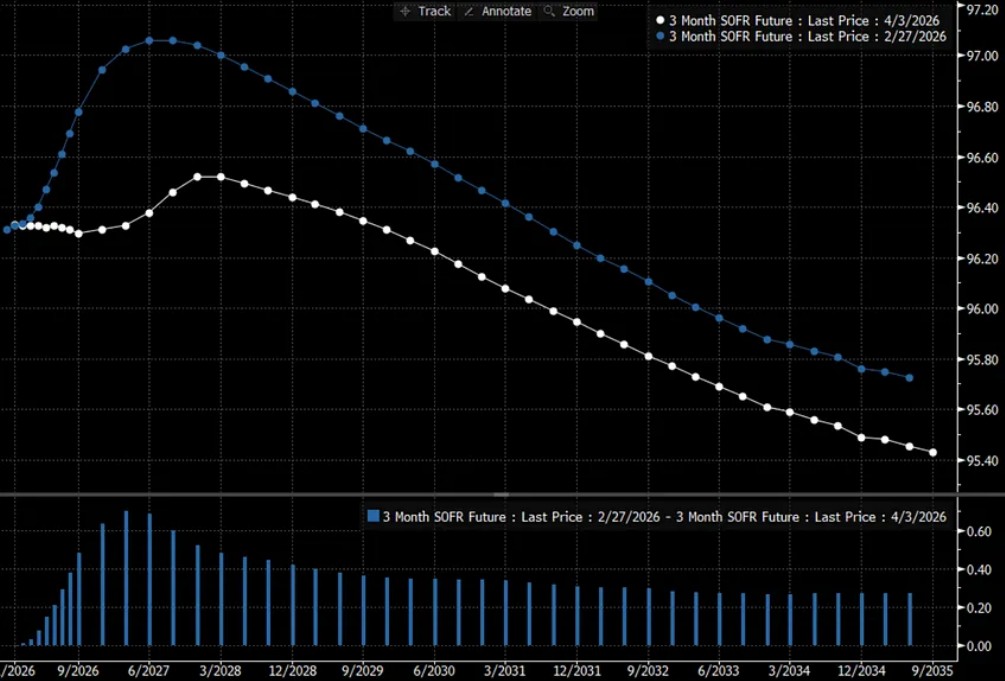
Before the conflict broke out, the SFRM6-SFRM7-SFRM8 fly had priced in nearly 3 more rate cuts between M6 and M7 than M7 and M8 – now that’s 0. Playing for cuts to be pulled forward again seems asymmetric, as fears of global inflation due to strait closure ease and any potential for longer term impacts to weaken the economy and pull forward cuts.冲突爆发前,SFRM6-SFRM7-SFRM8 蝶式价差所隐含的是 M6 至 M7 之间将有近 3 次降息多于 M7 至 M8——而现在这个差值为零。押注降息预期再度前移具有不对称优势:海峡封锁引发的全球通胀担忧正在消退,同时冲突的长期影响可能削弱经济,进而推动降息提前。
As we mentioned earlier, we are too acutely aware of the trigger finger investors have when it relates to stocks and headlines right now to make a very near term call on the direction of equity indices. However, we’re pretty content to do so on a relative basis.如前所述,鉴于当前投资者对股票和新闻标题的反应极度敏感,我们不愿对股指的短期方向做出判断。然而,在相对价值层面,我们相当有信心。
It’s a bit more complex than just “who’s got the least reserves” if we’re expecting any sort of continued reopening. And if we want to position in a way where this toll solution is the way things proceed for the time being, we should also add in a lens that views things through diplomatic relations.如果我们预期某种程度的持续重新开放,情况就比简单的「谁的储备最少」要复杂得多。如果我们想以过渡性收费通行方案为前提来布局,还应当加入一个外交关系的分析维度。
Level of Energy Security (measured by energy imports going through the strait, size and composition of strategic reserves)能源安全水平(衡量指标:经由海峡的能源进口量、战略储备的规模与构成)
Willingness to “Play Ball” with whoever controls the Strait (if they’ve already negotiated to get ships through, that’s a good sign they’ll be able to navigate however this plays out. If they’ve expressed unwillingness to do so, especially in light of criteria A being weak, they’re probably worse off)与海峡控制方「合作」的意愿(如果一个国家已经通过谈判获得了船只通行权,这是一个好迹象,说明它有能力应对接下来的各种变局。如果一个国家表现出不愿合作的态度,尤其是在前述能源安全条件较弱的情况下,其处境可能会更加不利)
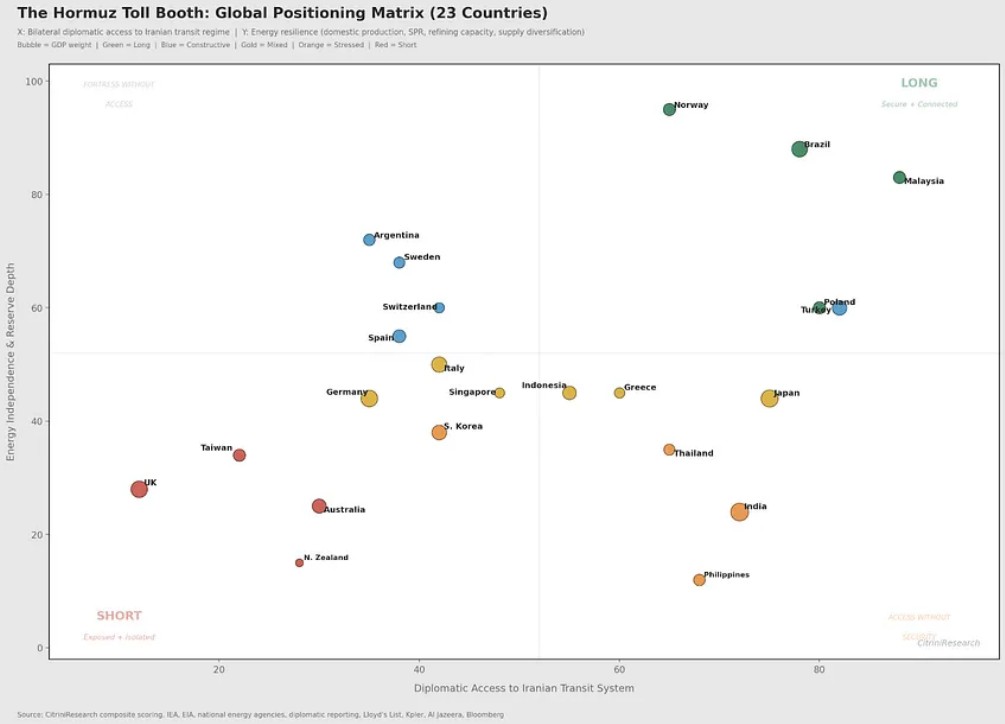
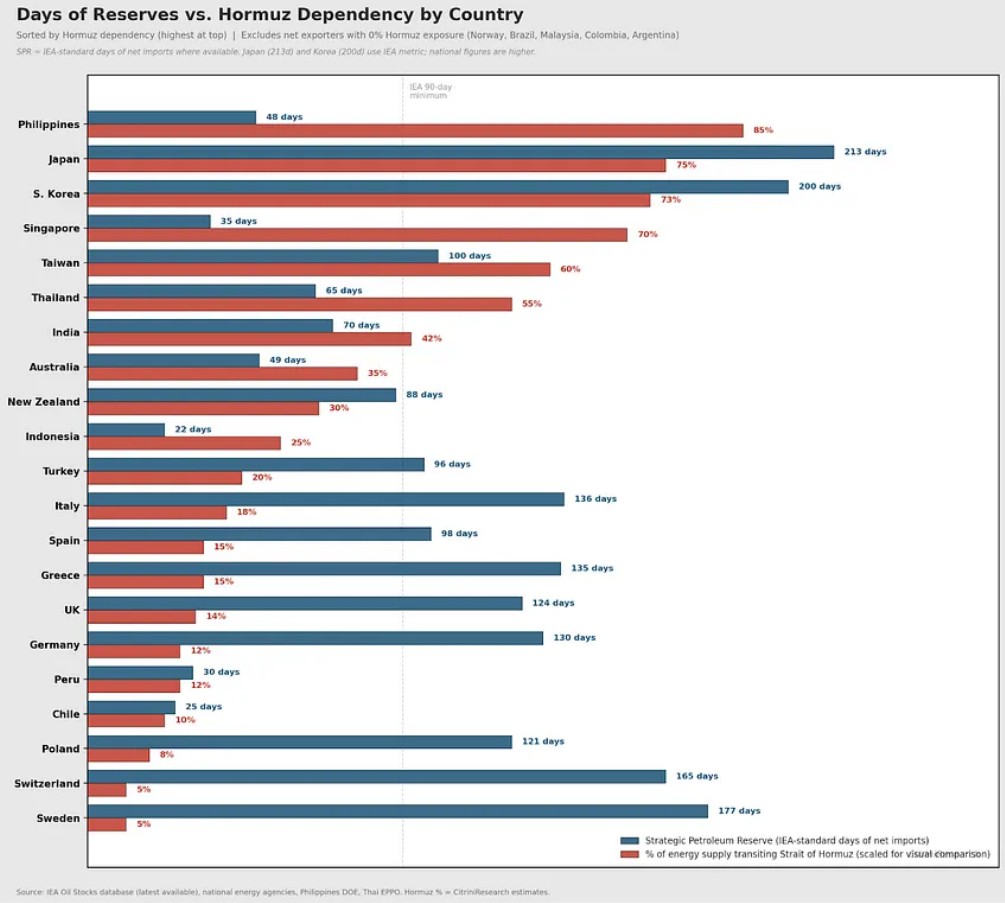
A few potential country long/short pairs that fall out of this analysis naturally:基于上述分析框架自然衍生出的几组国家配对多空组合:
Long Norway / Short Australia (net exporter with no chokepoint vs. net exporter that can’t refine its own fuel)做多挪威 / 做空澳大利亚(净能源出口国且不受咽喉要道制约 vs. 净能源出口国但无法自主炼化燃料)
Long Malaysia / Short India (terms-of-trade transfer, both have diplomatic access, opposite energy positions)做多马来西亚 / 做空印度(贸易条件转移效应,两国均拥有外交通行渠道,但能源地位截然相反)
Long Poland / Short UK (European energy security divergence, diplomatic neutrality vs. leading the opposition)做多波兰 / 做空英国(欧洲内部能源安全分化,外交中立 vs. 反对阵营的领头羊)
Long Japan / Short Korea (diplomatic execution gap - Japan has the most friendly relations with Iran out of any of the G7, same structural exposure, different crisis management)做多日本 / 做空韩国(外交执行力差距——日本在 G7 中与伊朗关系最为友好,两国结构性风险敞口相同,但危机管理能力截然不同)
Long Turkey / Short Germany (European energy corridor vs. European energy consumer, mediator vs. bystander)做多土耳其 / 做空德国(欧洲能源通道国 vs. 欧洲能源消费国,调停者 vs. 旁观者)
This should drive home that what we’ve described as our view of the conflict is nuanced – it doesn’t fit neatly into “strait open crude down” or “strait closed crude parabolic”. We think long December 2026 WTI crude works well from here, and would ultimately be on the lookout to put on long CLZ6 versus short front month. We have to caution that we’d keep a tight stop on the front month leg given the potential for nonlinear developments associated with a ground operation (or simply wait to put it on), which could spike the front end in ways that hurt the short leg before the thesis plays out. The front month at $110 and December 2026 at $71 tells you the market is pricing a short, sharp disruption.以上足以说明我们对冲突的看法是细致入微的——它无法简单归类为「海峡开放原油下跌」或「海峡关闭原油暴涨」。我们认为从当前位置做多 2026 年 12 月 WTI 原油是合理的,并最终会寻找机会建立做多 CLZ6、做空近月合约的头寸。需要提醒的是,鉴于地面行动(或其他非线性事件)可能导致近月价格剧烈波动、损害空头端的表现,我们会对近月端设置较紧的止损(或干脆等待更好的时机再建仓)。近月合约 $110、2026 年 12 月合约 $71 的价差告诉你,市场正在定价一次短暂而剧烈的中断。
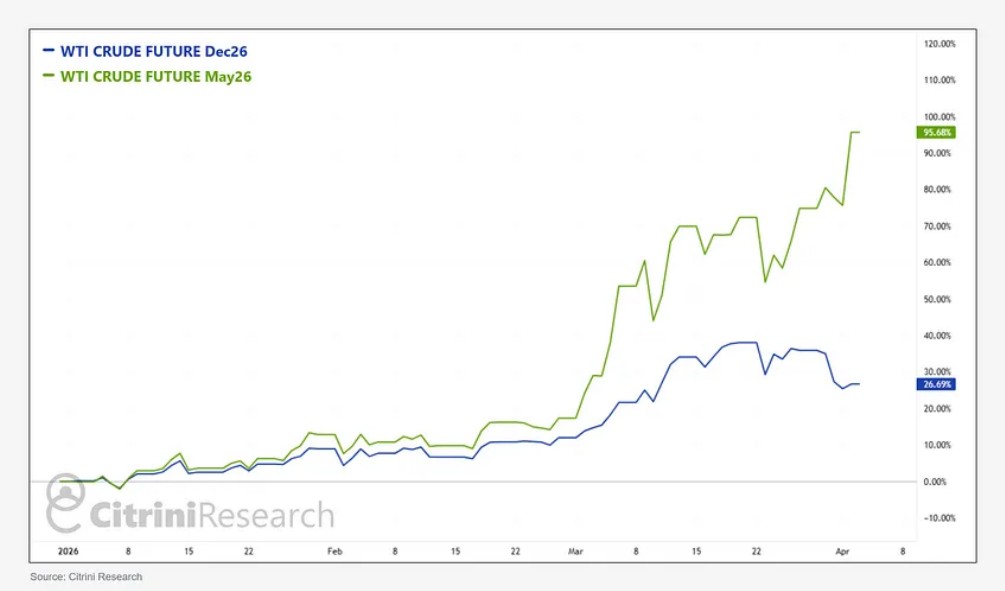
We think the disruption is longer and the new normal involves a permanent risk premium, but that we’ll likely see as high as 50% of pre-conflict traffic within the next 4-6 weeks. We’ll be looking for opportunistic adds to build this position, and we’re already long CLZ2026 in our macro trade list.我们认为中断持续时间将更长,新常态将包含永久性的风险溢价,但未来 4-6 周内通行量有望恢复至冲突前水平的 50%。我们将寻找逢低加仓的机会来逐步建立头寸,目前我们已在宏观交易清单中持有 CLZ2026 多头。
Regardless of how this conflict resolves, the new paradigm where the US has left its allies to fend for themselves will result in more fiscal spending directed towards both energy independence and defense.无论这场冲突如何收场,美国放任盟友自保的新范式都将导致各国在能源独立和国防两个方向上加大财政支出。
Every ceasefire rumor that knocks these names down is an opportunity. The structural shift in European and Japanese energy and defense policy is permanent whether Hormuz reopens next week or next year. It feels asymmetric to buy dips caused by headlines about resolution or deals. An easy expression of this is the Europe Aerospace and Defense ETF (EUAD US)每一次因停火传言导致的回调都是买入机会。欧洲和日本在能源与国防政策上的结构性转向是永久性的,无论霍尔木兹海峡下周还是明年重新开放。在解决方案或协议的新闻标题打压下逢低买入,具有不对称的上行空间。一个简洁的表达方式是买入欧洲航空与国防 ETF(EUAD US)。
At the same time, both the EU and Japan will be focused on ensuring that they move towards securing energy independence – this will motivate their fiscal spending. Additionally, many companies with upside to such a trend also will benefit from any windfall due to higher electricity prices (especially where the price of electricity is primarily dictated by the price of gas). This provides an asymmetry in which the strait having a more gradual reopening is beneficial, but the simple fact that the world is becoming more multipolar and US security guarantees are less assured is enough to get this moving.与此同时,欧盟和日本都将致力于推动能源独立,这将驱动其财政支出。此外,许多受益于此趋势的公司也将从电力价格上涨的意外利好中获益(尤其是在电价主要由天然气价格决定的地区)。这提供了一种不对称性:海峡更缓慢的重新开放是有利的,但仅凭世界日益多极化、美国安全保障愈发不可靠这一事实,就足以推动这一主题启动。
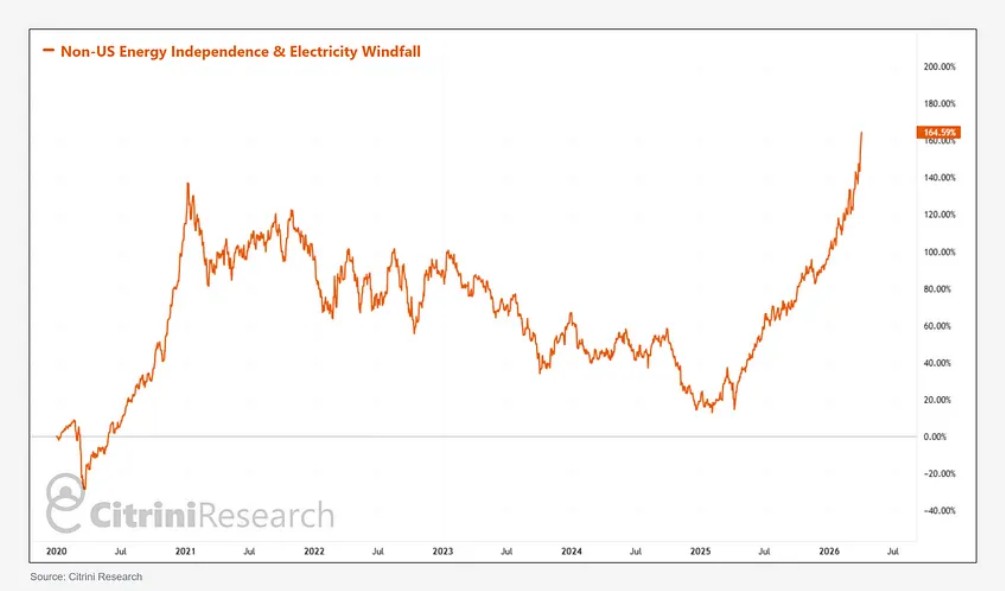
We have assembled a basket / watchlist of companies that we feel fit this description in the EU and Japan:我们已在欧盟和日本范围内筛选出一组符合上述逻辑的公司篮子/观察名单:
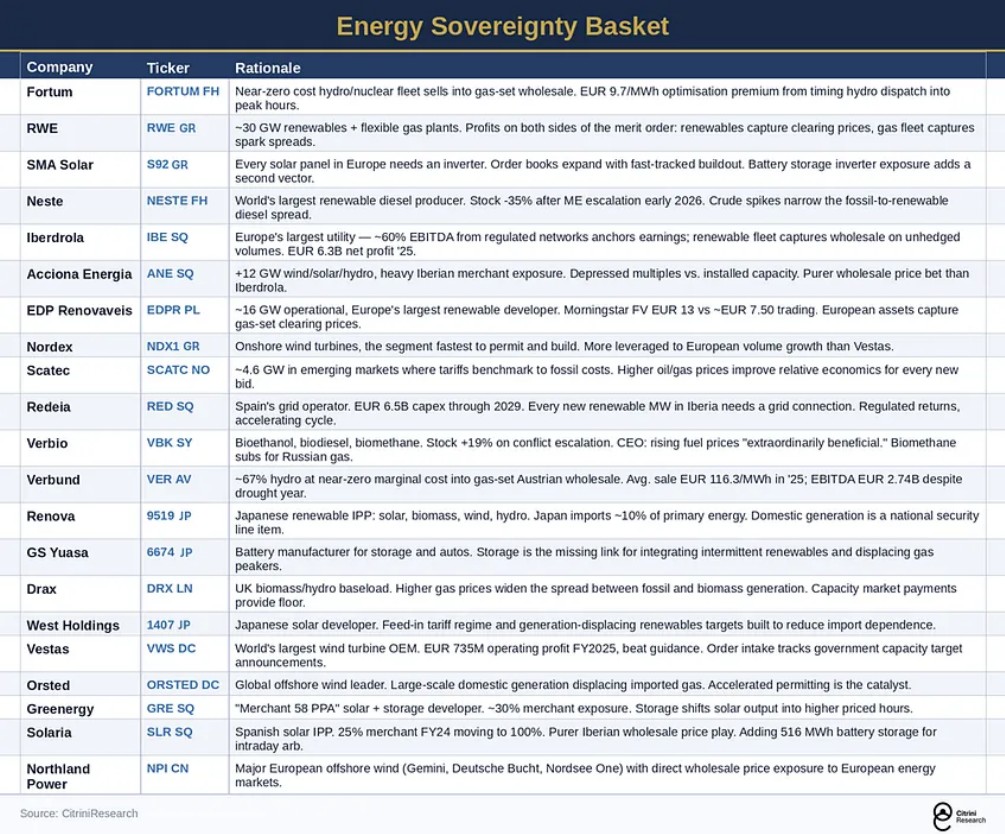
This will be messy, it will require nuance – even the reaction on Twitter to our post about observing more ships going through the Strait had reactions that deemed that impossible because the conflict was ongoing. People will need to change their binary frameworks.这将是一个混乱的过程,需要细致的判断力——甚至我们在 Twitter 上发布关于观察到更多船只通过海峡的帖子时,都有人认为这不可能,因为冲突还在进行中。人们需要改变他们非此即彼的思维框架。
Still, the Iran conflict is just one block in the new world order that’s been building up for the past decade. It’s more complex than “declining American hegemony” and more complicated than “every country spends more money on defense and energy”. As alliances become negotiable, situational, transactional, and states no longer wait for a single hegemon to restore order, there will be wide ranging investment implications.尽管如此,伊朗冲突只是过去十年间逐步形成的新世界秩序中的一个板块。它比「美国霸权衰落」更为复杂,也比「每个国家都增加国防和能源支出」更加微妙。当联盟关系变得可谈判、情境化、交易化,当各国不再等待单一霸权来恢复秩序时,其投资影响将是深远而广泛的。
This doesn’t stop here - Venezuela, Iran, Cuba…they are all part of a broader strategy that ends with a very different looking world.这不会止步于此——委内瑞拉、伊朗、古巴……它们都是更宏大战略的一部分,最终将塑造一个面貌截然不同的世界。
What should we be putting on our radar right now? Things like what the world looks like if Iranian sanctions get dropped or Cuba becomes part of the US or the EU acts more like a bloc. The conflict angle is paradoxically the smallest part of the story compared to what happens when every country on both sides of the strait starts behaving like a sovereign actor with its own balance sheet to protect. That shift changes how investors should think about security, industrial policy, and the winners and losers from a slow reorganization of the prevailing world order. That is the subject of our upcoming thematic primer, Age of Empires.我们现在应该关注什么?比如:伊朗制裁解除后的世界会是什么样子,古巴成为美国一部分后会怎样,欧盟真正以一个集团行动又会如何。矛盾的是,冲突本身在整个叙事中反而是最小的部分——真正重要的是,当海峡两侧的每个国家都开始以主权行为者的身份行事、各自守护自己的资产负债表时,世界将如何变化。这种转变将改变投资者对安全、产业政策以及现行世界秩序缓慢重组中赢家与输家的思考方式。这正是我们即将发布的主题研究报告《帝国时代》的主题。
For now, we are content with what we’ve learned on our excursion. Analyst #3 is safe and ready for the next one.目前,我们对此次远行所获得的认知感到满意。Analyst #3 安全归来,随时准备出发执行下一次任务。
We feel, for the first time since this conflict began, that we can more confidently assess the extent of the risks and more clearly define the potential outcomes and probabilities thereof. We didn’t think we’d come out of this with a more optimistic view, but the reality is it’s hard to go anywhere but up when your view is a prolonged and total closure of one of the most vital waterways for energy on Earth. The complex reality is that the Strait is not fully closed and is likely to see traffic pick up, but that the conflict is unlikely to resolve neatly and quickly. That’s difficult to translate into the next 100 points for SPX, but it’s what’s happening.自这场冲突爆发以来,我们第一次感到能够更有信心地评估风险的全貌,更清晰地界定潜在结果及其概率。我们没想到会带着一个更乐观的观点回来,但现实是——当你此前的预判是地球上最重要的能源水道之一将长期完全封闭时,方向只能是向上修正。复杂的现实是:海峡并未完全关闭,通行量很可能继续回升,但冲突也不太可能干净利落地迅速解决。这很难转化为 SPX 接下来 100 点的涨跌预测,但这就是正在发生的事情。